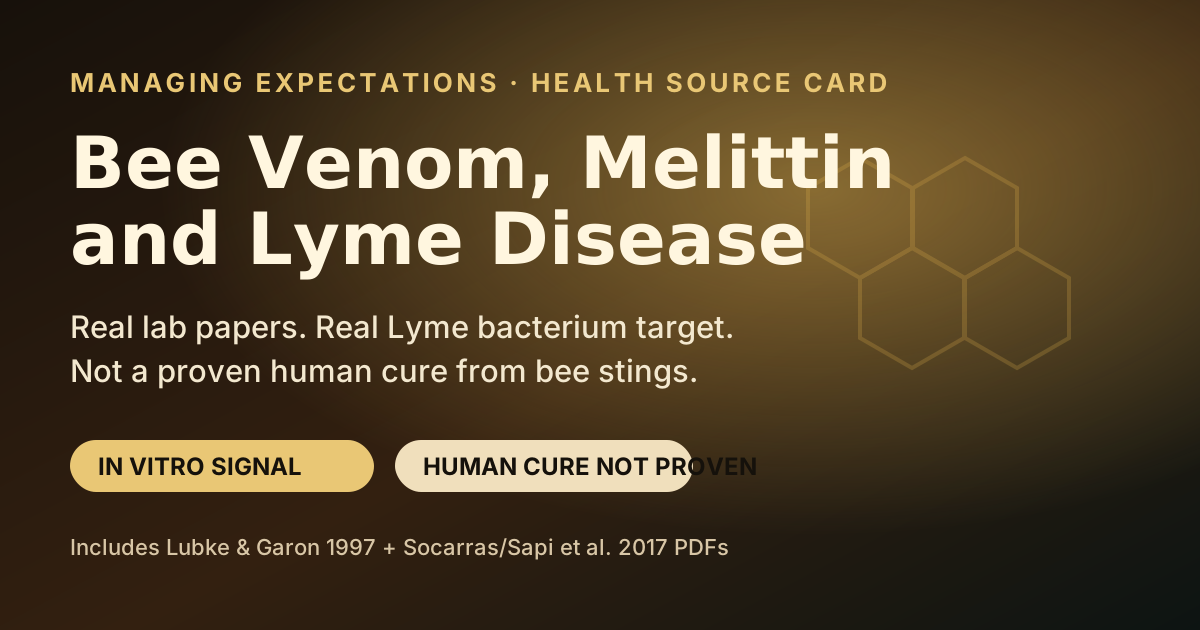
A viral Reel credits MrBallen and frames bee stings as proof that “natural healing practices from plants, insects, animals” are left out of medical textbooks. The story is rooted in a real Lyme-disease anecdote and real melittin papers. But the evidence stops well short of proving that live bee stings cure Lyme disease in people.
Reader caution
This is a source-literacy note, not medical advice. Lyme disease is a medical infection that should be diagnosed and treated by qualified clinicians. Bee venom and bee stings can cause severe allergic reactions, including anaphylaxis. Do not self-administer bee-sting therapy.
What the Reel claims
The Instagram post does not cite the paper in the caption. Its public metadata and comments point to the Ellie Lobel / MrBallen bee-sting story: a woman with long-running Lyme symptoms was reportedly stung by bees and later promoted bee venom therapy. Social reposts often turn that into a stronger claim: bee stings or bee venom can cure Lyme disease.
The accurate source question is narrower: what do the papers actually show about bee venom, melittin and Borrelia burgdorferi?
The real papers
The older paper is Lubke and Garon’s 1997 Clinical Infectious Diseases article, The Antimicrobial Agent Melittin Exhibits Powerful In Vitro Inhibitory Effects on the Lyme Disease Spirochete. It found that melittin, a 26-amino-acid peptide in honeybee venom, produced immediate inhibitory effects on laboratory cultures of Borrelia burgdorferi.
The later paper is Socarras, Theophilus, Torres, Gupta and Sapi’s 2017 Antibiotics article, Antimicrobial Activity of Bee Venom and Melittin against Borrelia burgdorferi. It extended the laboratory work by testing bee venom and melittin against spirochete, round-body and biofilm forms in vitro.
Those are meaningful research signals. They are also not human clinical proof. The phrase that matters is in vitro: the work was done in lab conditions against the bacterium, not as a controlled human trial showing that bee stings cure Lyme disease.
Why this matters
Lyme disease can be serious, confusing and emotionally exhausting, especially when symptoms persist or diagnosis is delayed. That makes “hidden cure” stories powerful. A real lab paper can become a bridge from legitimate curiosity to unsafe certainty if the evidence label gets stripped off.
Melittin is biologically active. That is exactly why it is interesting — and exactly why it is risky. The 2017 paper itself notes clinical-use concerns around cytotoxicity and severe allergic reactions. A compound that can disrupt bacterial membranes can also have harmful effects in human tissue if used the wrong way.
Evidence labels
- Confirmed: the 1997 and 2017 papers are real and relevant to bee venom/melittin and Borrelia burgdorferi.
- Confirmed: the core evidence is laboratory/in vitro, not a controlled human cure trial.
- Reasonable research question: melittin or derived compounds may deserve further antimicrobial investigation.
- Not proven: live bee stings cure Lyme disease in people.
- Safety issue: bee stings and bee venom can trigger severe allergic reactions, and “more stings” is not a safe self-treatment protocol.
Reports and research PDFs
- Download: Lubke & Garon 1997 melittin paper
- Download: Socarras / Sapi et al. 2017 bee venom and melittin paper
- Oxford Academic page for the 1997 Clinical Infectious Diseases article
- University of New Haven page for the 2017 paper
- MDPI article page: Antimicrobial Activity of Bee Venom and Melittin against Borrelia burgdorferi
Story and context links
- Instagram Reel lead: @bio1art, credited to @mrballen
- BBC Future: “How a bee sting saved my life”
- Smithsonian Magazine: “How a Stinging Swarm of Bees Can Save a Life”
- CDC: Lyme disease treatment overview
- CDC: Lyme signs and symptoms
- Local source note
- PDF hash manifest
- Instagram metadata summary
Bottom line
The managed expectation is simple: bee venom research is real, and melittin has shown strong laboratory activity against the Lyme spirochete. But the Reel’s implied leap — that bee stings are a proven Lyme cure — is not established. The safe conclusion is curiosity, not self-treatment.
Health Source Cards
Continue the Managing Expectations health library: viral medical claims, source papers, treatment hype, and evidence labels.
Back to Health Section