Energy / uranium / nuclear fuel cycle / supply-chain reality
Cameco Q2 2026: Uranium Fuel-Cycle Reality Check
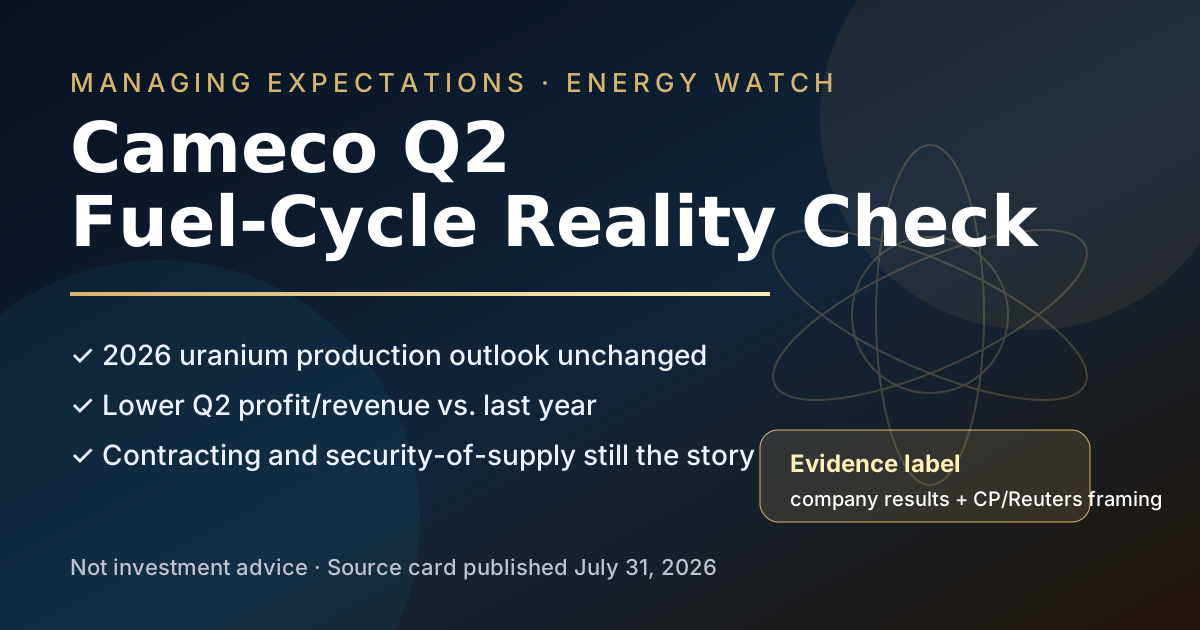
The useful headline is not “uranium is up” or “nuclear stocks are down.” The source-backed headline is narrower: Cameco reported lower second-quarter profit and revenue than a year ago, while keeping its 2026 uranium production outlook unchanged and emphasizing security-of-supply demand across the nuclear fuel cycle.
That matters for the Energy watch because SMR, data-center and industrial-nuclear stories all run through a less glamorous bottleneck: mining, milling, conversion, enrichment, fabrication, contracting and delivery discipline. A fuel-cycle company’s quarterly report is not a reactor milestone, but it is a reality check on whether nuclear-growth narratives have a supply chain beneath them.
Verified official result
Cameco’s official July 31 release reports Q2 2026 consolidated results for the quarter ended June 30 and says annual uranium production guidance remains unchanged.
Production guidepost
The company says it still expects 19.5 to 21.5 million pounds U3O8 attributable production in 2026 in its uranium segment, despite disruptions at northern Saskatchewan operations.
Mainstream framing
BNN Bloomberg / The Canadian Press reported profit of $25 million, revenue of $814 million and lower adjusted earnings versus the same quarter last year.
What changed
Cameco reported net earnings of $25 million for Q2 2026 and said second-quarter and first-half results were lower than in 2025 primarily because of lower equity earnings from Westinghouse, normal delivery timing and lower planned 2026 sales delivery volumes. BNN Bloomberg / The Canadian Press framed the same quarter as a drop in profit and revenue compared with the prior year.
The counterweight is operational guidance and contracting. Cameco says temporary disruptions at Key Lake, McArthur River and Cigar Lake have not changed its uranium-production guidance. It also says uranium-segment contracts are in place for average annual deliveries of more than 28 million pounds U3O8 over the next five years, with commitments higher than average in 2026 through 2028.
Why it belongs in the Energy watch
- Fuel-chain discipline: advanced nuclear announcements are not self-fuelling. Uranium production, conversion/fuel services, enriched fuel availability and contracting terms decide what can actually be built and operated.
- Security of supply: Cameco says customers are increasingly focused on security of supply. That is the same strategic logic showing up in SMR, data-center firm-power and industrial heat conversations.
- Not a reactor milestone: this is not a licence, construction start, grid connection or data-center power purchase agreement. It is a supply-chain signal around the companies that may have to feed those future projects.
- Canada relevance: Cameco is Saskatchewan-based, with northern Saskatchewan operating exposure and a role in a global nuclear fuel-cycle story that intersects with Canadian resource, industrial and energy-security policy.
Cautions
Do not turn one quarterly report into a broad nuclear-market verdict. Lower Q2 profit does not disprove long-term nuclear demand, and unchanged production guidance does not guarantee future SMR deployment, data-center nuclear power or higher uranium prices. Company releases are interested-party sources; mainstream reporting helps frame the earnings comparison and market-expectation angle.
Not investment advice: this source card is an infrastructure and evidence note. It is not a recommendation to buy, sell or hold uranium, nuclear developers, utilities, miners, fuel-cycle companies or data-center power securities.
Primary and reporting sources
- Cameco official release — Cameco Reports 2026 Second Quarter Results (July 31, 2026).
- BNN Bloomberg / The Canadian Press — Cameco reports Q2 profit and revenue lower from a year ago (July 31, 2026).
- TradingView / Reuters headline lead — Uranium producer Cameco misses Q2 profit estimates on lower volumes, Westinghouse contribution (headline-visible lead; full text not accessible during capture).
- Managing Expectations source note and checked leads.