A new Instagram Reel shares what it describes as a rare 1989 Charles Manson interview. The useful lesson is not Manson’s opinion. It is the structure of the voice: isolate fear, attach it to an enemy, turn grievance into identity, then call that intensity truth.
Reader caution
This source card discusses antisemitic and scapegoating rhetoric. It is included as media-literacy analysis, not endorsement. The article quotes only the minimum needed to identify the clip and its pattern.
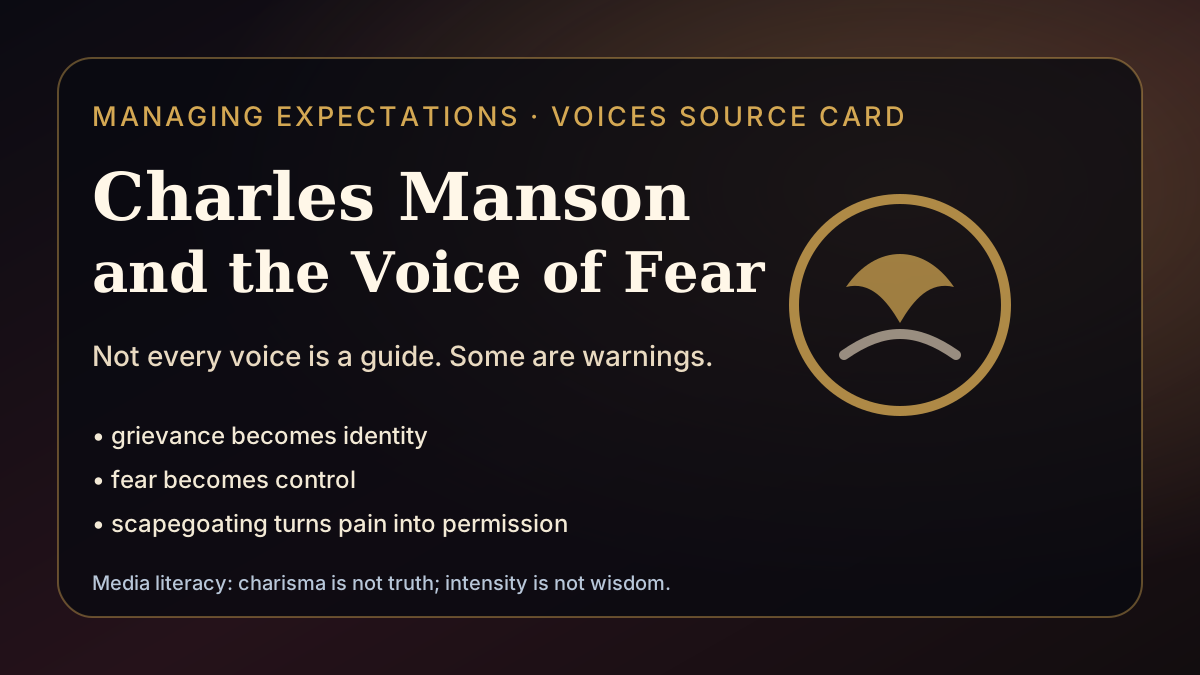
What the Reel shows
The Instagram Reel was posted by @matthew.stellar with the description “Rare 1989 Charles Manson interview.” The clip runs about 86 seconds. Manson speaks about fear, World War II, money, Hitler, hate and group identity.
The transcript includes explicit antisemitic scapegoating: he blames “the Jews” for keeping the Second World War alive and profiting from it. The exact original broadcast/date was not independently verified from the Reel alone, so the article treats the Instagram clip as the captured source and labels the “1989” description as the uploader’s claim.
Why this belongs under Voices
Managing Expectations usually uses “Voices” for thinkers worth hearing. This entry is different. It is a warning shelf: a reminder that a voice can be compelling, intense and quotable while being morally rotten and factually poisonous.
| What the voice does | How it works | What to notice |
|---|---|---|
| Names a fear | The speaker starts with the audience’s anxiety before facts are established. | Fear makes people listen before they evaluate. |
| Finds a target | Complex history becomes one blamed group. | Scapegoating replaces evidence with emotional relief. |
| Turns hate into identity | The clip frames hatred as the thing that gives a person meaning. | That is not wisdom; it is dependency. |
| Uses intensity as proof | The performance feels urgent, transgressive and “uncensored.” | Intensity can hide incoherence. |
The historical context
Charles Manson was an American criminal and cult leader associated with the Manson Family. Public biographical summaries describe him as the founder of the group and as a figure notorious for directing the Tate–LaBianca murders in Los Angeles in 1969. He is not a harmless countercultural eccentric; he is a case study in manipulation, coercion and destructive charisma.
The United States Holocaust Memorial Museum defines antisemitism as prejudice against or hatred of Jewish people and notes that it has often taken the form of systemic discrimination and persecution, repeatedly leading to serious and deadly violence. That matters here because the clip does not merely mention history. It uses an old conspiracy pattern: blame Jewish people as a hidden force behind war, money and manipulation.
The Managing Expectations read
The lesson is not “Manson was right about fear.” The lesson is that manipulators understand fear. They know fear can be named, redirected, monetized and weaponized. A person who feels unseen can be offered an enemy; a person who feels powerless can be offered a story where hatred becomes purpose.
That is why the clip should be studied as a warning. Charisma is not truth. Transgression is not courage. A voice can sound like it is exposing the system while actually teaching people to outsource their pain into blame.
Practical questions for any viral “dark wisdom” clip
- Is the clip asking me to understand something, or to hate someone?
- Does it identify evidence, or only an enemy?
- Does the speaker clarify complexity, or collapse it into a scapegoat?
- Would the idea still work if the target group were removed?
- Is the account using shock as a growth strategy?
Source links
- Original Instagram Reel
- Local transcript of Reel audio
- Local public metadata extract
- Charles Manson background summary
- Tate–LaBianca murders background summary
- United States Holocaust Memorial Museum: Antisemitism
- Local source note
Voices shelf
Back to Managing Expectations Voices: not only voices to admire, but voices that teach us how influence, expectation and fear work.
Back to Voices