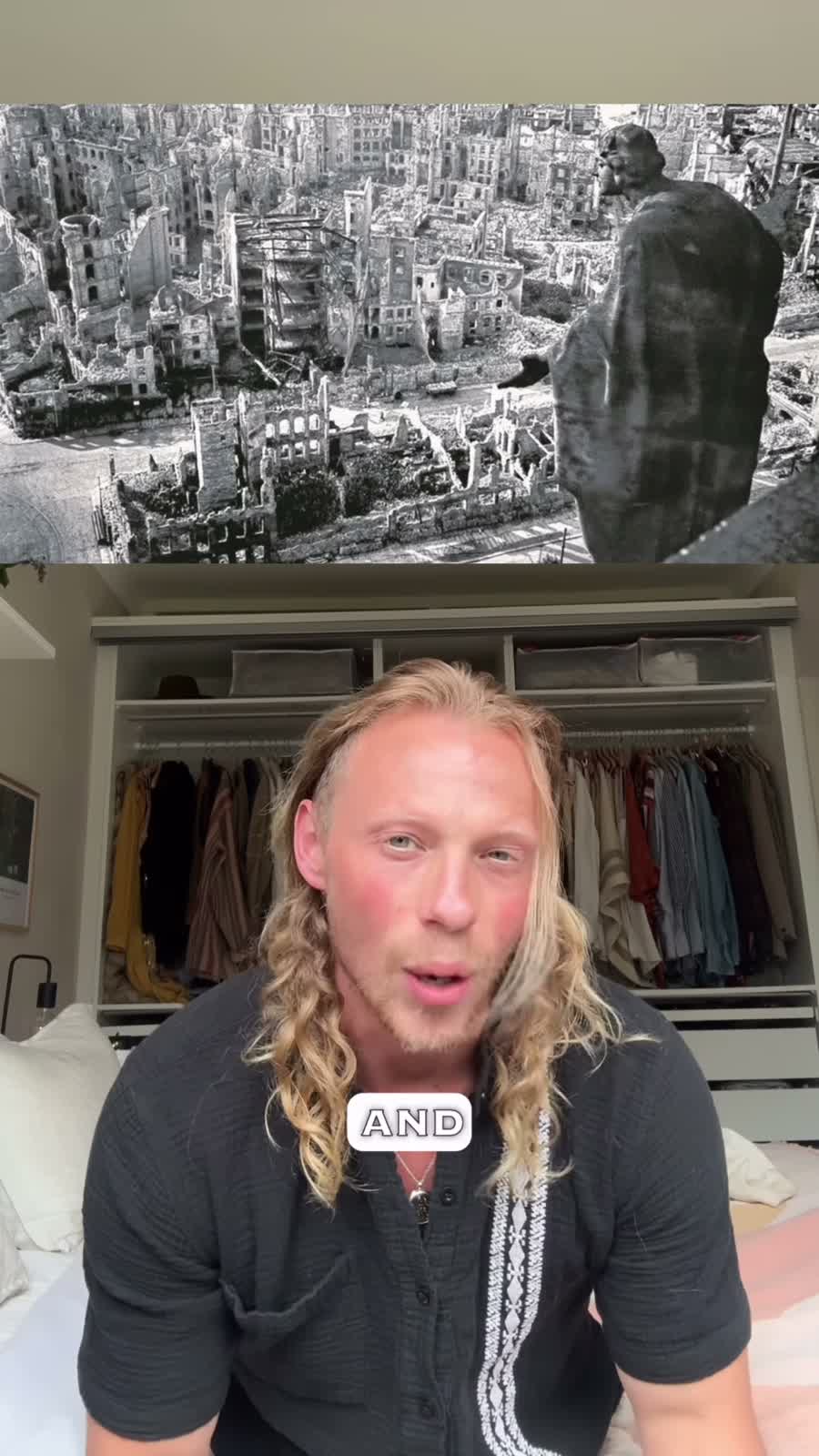
Chris sent an Instagram Reel by @disco_orpheus arguing that “the world actually ended in 1945” and that today’s society is dominated by industrial chemistry — benzene, plastics, pesticides, pharmaceuticals, fertilizer, Teflon, nylon and microplastics. The strongest reading is: real dual-use chemical history, real pollution concerns, but a symbolic argument that overstates its certainty.
Reader caution
This is source review and media-literacy commentary, not medical advice, chemical-safety advice, environmental testing guidance, or a claim that every modern medicine or material is harmful. Chemical exposure and pollution questions need specific evidence, dose, route, context and risk assessment.
What the Reel claims
The Reel says the world did not end politically in 1945 but did change technologically and chemically. It links Kekulé’s snake-dream story about benzene to plastics, detergents, pesticides and drug synthesis, then argues that war chemicals were redirected into civilian life: ammonium nitrate into fertilizer, organophosphates into pesticides, mustard gas into chemotherapy, chlorine into disinfection and bleach, Teflon into cookware, and nylon into microplastics.
What is real
There are real historical connections. Benzene is a foundational industrial chemical. Haber-Bosch ammonia chemistry changed fertilizer production and global agriculture. Ammonium nitrate has both fertilizer and explosive uses. Organophosphate chemistry includes both nerve agents and pesticide classes. Nitrogen mustard chemistry helped open the era of chemotherapy. Plastics expanded dramatically through wartime and post-war industrial systems, and synthetic textiles can shed microfibers.
The microplastics concern is also real. Reviews describe synthetic microfibers and other microplastic sources in aquatic systems, and newer biomedical reviews raise questions about endocrine, oxidative-stress and reproductive effects. That does not mean every claim in every Reel is settled, but it is not an imaginary problem.
What the Reel overstates
“The world ended in 1945” is a metaphor, not a fact. “The weapons of war were redirected onto civilians” is a political/philosophical frame that compresses many different histories into one story. Some technologies have clear war/civilian dual-use histories; others developed through broader industrial, medical, agricultural and consumer demand.
The phrase “pharmaceutical drugs keep people sick” is too broad. Modern medicine includes overprescribing, conflicts of interest and iatrogenic harms — but also antibiotics, anesthesia, insulin, chemotherapy, vaccines, surgical drugs and other treatments that have saved lives. Managing Expectations should not replace one simplistic story with another.
The nylon/microplastics claim also needs nuance. Synthetic textiles are a major microfiber source, but “nylon is the largest contribution” is not the safest wording without a specific study and scope. Tire wear, packaging, paint, dust, wastewater and many polymers also contribute.
Evidence labels
- Verified: The Reel exists and frames post-1945 modernity as a chemically transformed world.
- Verified: Many named chemicals/materials have real industrial, wartime, agricultural or medical histories.
- Partly true: Several chemical technologies have dual-use war/civilian pathways.
- Overstated: A single hidden “chemical war lord” narrative explaining modern health and society.
- Real concern: Plastics and microplastics are legitimate environmental and health research topics, but claims need specificity.
Primary links
- Instagram Reel: @disco_orpheus, “The snake eats its own tail…”
- Britannica: benzene
- Science History Institute: Fritz Haber and fertilizer chemistry
- Britannica: Haber-Bosch process
- ACS: ammonium nitrate
- PubMed: organophosphate chemical nerve agents and oxidative stress
- NCI: nitrogen mustard
- Science History Institute: history and future of plastics
- PubMed: synthetic microfibers and tire wear particles
- PubMed: micro/nanoplastics and endocrine disruption review
- Local source note and transcript
Bottom line
The Reel is useful because it reminds viewers that chemistry is not neutral in practice: materials, weapons, agriculture, medicine, consumer convenience and pollution are historically tangled. But the correct label is: real dual-use history and real pollution risk, expressed through a symbolic anti-industrial narrative — not proof that all modern chemistry is a single war against civilians.
Health Papers, Studies & Films
Continue the source library for health, environment, technology and medical-controversy source cards.
Back to Health Section