Energy / MARAD / Port of Corpus Christi / maritime SMRs / port microgrids
Corpus Christi’s MARAD SMR Agreement: Maritime Nuclear Moves to Port Infrastructure
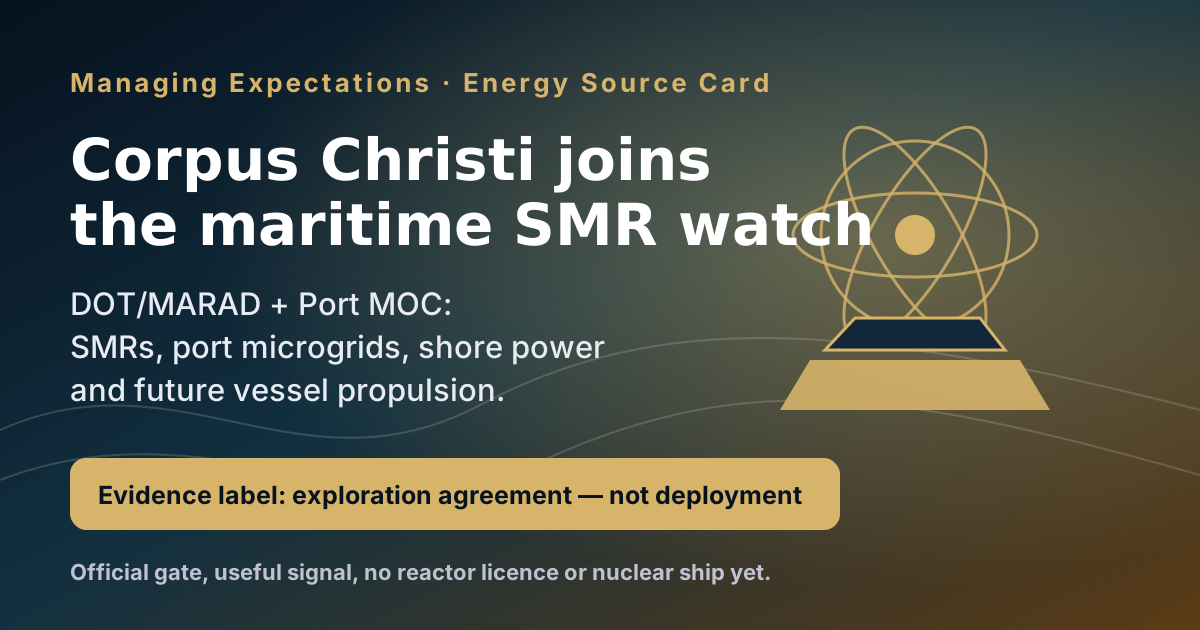
The important development is not that nuclear-powered ships are suddenly operating out of Texas. It is narrower and still useful: the U.S. Department of Transportation and the Maritime Administration say they signed a Memorandum of Cooperation with the Port of Corpus Christi to explore maritime small modular reactors, port microgrids, shore-power architecture and infrastructure for future vessel-propulsion concepts.
That makes Corpus Christi a second visible port-level test case in Washington’s 2026 maritime-SMR push, after the Port of Long Beach agreement. It is a real official gate for the Energy watch because ports, ships and heavy industrial shore power are exactly where the “firm power” conversation starts colliding with safety, security, fuel, insurance, permitting and public-process reality.
What changed
DOT/MARAD announced a partnership with the Port of Corpus Christi focused on SMR technology for maritime applications and broader advanced maritime energy systems.
What the MOC covers
The official release names potential SMR integration, resilient port microgrids, shoreside power architecture, infrastructure for emerging vessel propulsion concepts and workforce development.
What it is not
It is not a reactor licence, nuclear-vessel approval, construction notice, selected reactor vendor, fueling plan, operating microgrid or proof of cheaper shipping.
Why it belongs in the Energy watch
Most SMR headlines are about reactors, utilities or data centres. This one is about the harder interface: the port as an energy system. A port that handles petroleum, LNG, ships, rail, trucks, industrial loads and emergency operations has different questions than a normal power plant site. If maritime nuclear ever moves beyond white papers, ports will need procedures for siting, security zones, emergency planning, crew training, shoreside electrical systems, fuel logistics, insurance and coordination with federal, state and local authorities.
That is why the precise language matters. DOT says the Port of Corpus Christi is the largest U.S. port for petroleum exports and a national leader in LNG shipments, and says LNG exports through the port have increased 81% since 2022. The maritime trade press framed the agreement as part of Washington’s attempt to position advanced nuclear inside a broader shipbuilding and maritime-competitiveness agenda. Those are strategic claims and context, not proof that a reactor will be built at the port.
The factual anchors
- Date and source: U.S. DOT public release dated August 20, 2026; MARAD page captured with a published time of August 19, 2026.
- Participants named by the official release: Transportation Secretary Sean P. Duffy, Maritime Administrator Stephen M. Carmel, U.S. Representative Michael Cloud, Port of Corpus Christi CEO Kent Britton, Commission Chairman Gabe Guerra and Port Chief Strategy and Innovation Officer Jeff Pollack.
- Agreement form: a Memorandum of Cooperation between MARAD and the Port of Corpus Christi.
- Scope: exploration of maritime energy systems, including potential SMR integration, resilient port microgrids, shoreside power architecture, infrastructure for emerging vessel propulsion concepts and workforce-development opportunities.
- Program context: DOT says this is the second agreement since the May 2026 SMR initiative launch; the prior port agreement involved Long Beach.
- Trade framing: Splash247 says the Corpus Christi partnership will initially focus on feasibility, infrastructure requirements and potential commercial applications rather than immediate deployment of nuclear-powered ships.
The disciplined read
Corpus Christi is a good place to watch because it is already an energy logistics hub. But an energy hub is not automatically a nuclear-ready site. A serious next gate would be a public work plan, technical partner list, site/infrastructure study, safety and environmental review path, community process, vessel-classification pathway, fuel-cycle strategy or regulator-facing document. Until then, the evidence supports an exploration agreement and a political-industrial signal.
For data-centre and mine-electrification readers, the lesson is similar: firm power is not just a reactor brochure. It is a stack of approvals, fuel supply, grid architecture, heat/electricity use case, liability, emergency planning and economics. Maritime SMRs may become relevant to ports and heavy industry, but today’s Corpus Christi item is still at the cooperation-and-study stage.
Cautions
Do not claim the Port of Corpus Christi has approved a nuclear plant, selected an SMR vendor, commissioned a microgrid, licensed a nuclear ship or changed port operations. The public record supports only a cooperative exploration framework.
Do not treat official quotes about lower costs, stronger supply chains or maritime dominance as achieved outcomes. They are policy claims that require later evidence: engineering studies, cost data, licensing milestones, public-safety plans and operating performance.
Direct terminal access to DOT/MARAD pages returned 403 during this automated run; the public pages were captured through `r.jina.ai` text snapshots and corroborated with MarineLink, Splash247 and Ocean News & Technology. Reader-facing links below point to the original official and publisher URLs.
Not investment advice: this source card is an infrastructure and evidence note. It is not a recommendation to buy, sell or hold reactor developers, uranium miners, fuel-cycle companies, shipbuilders, port operators, utilities, data-centre power suppliers or related securities.
Primary and reporting sources
- U.S. Department of Transportation — Trump’s Transportation Secretary Sean P. Duffy and Port of Corpus Christi Sign Agreement to Explore Nuclear Maritime Technologies (official release, August 20, 2026).
- U.S. Maritime Administration — Port of Corpus Christi agreement release (official MARAD page, August 19, 2026 capture).
- MarineLink — Transportation Secretary, Port of Corpus Christi to Explore Nuclear Maritime Technologies (maritime trade report, August 19, 2026).
- Splash247 — Corpus Christi joins US maritime nuclear push (maritime trade report, August 20, 2026).
- Ocean News & Technology — Port Of Corpus Christi Signs SMR Agreement To Advance Nuclear Maritime Technology (trade report, August 20, 2026).
- Managing Expectations source note and checked leads.