Energy / SMRs / microreactors / data centers
Four U.S. Microreactors Hit Criticality — What That Actually Means
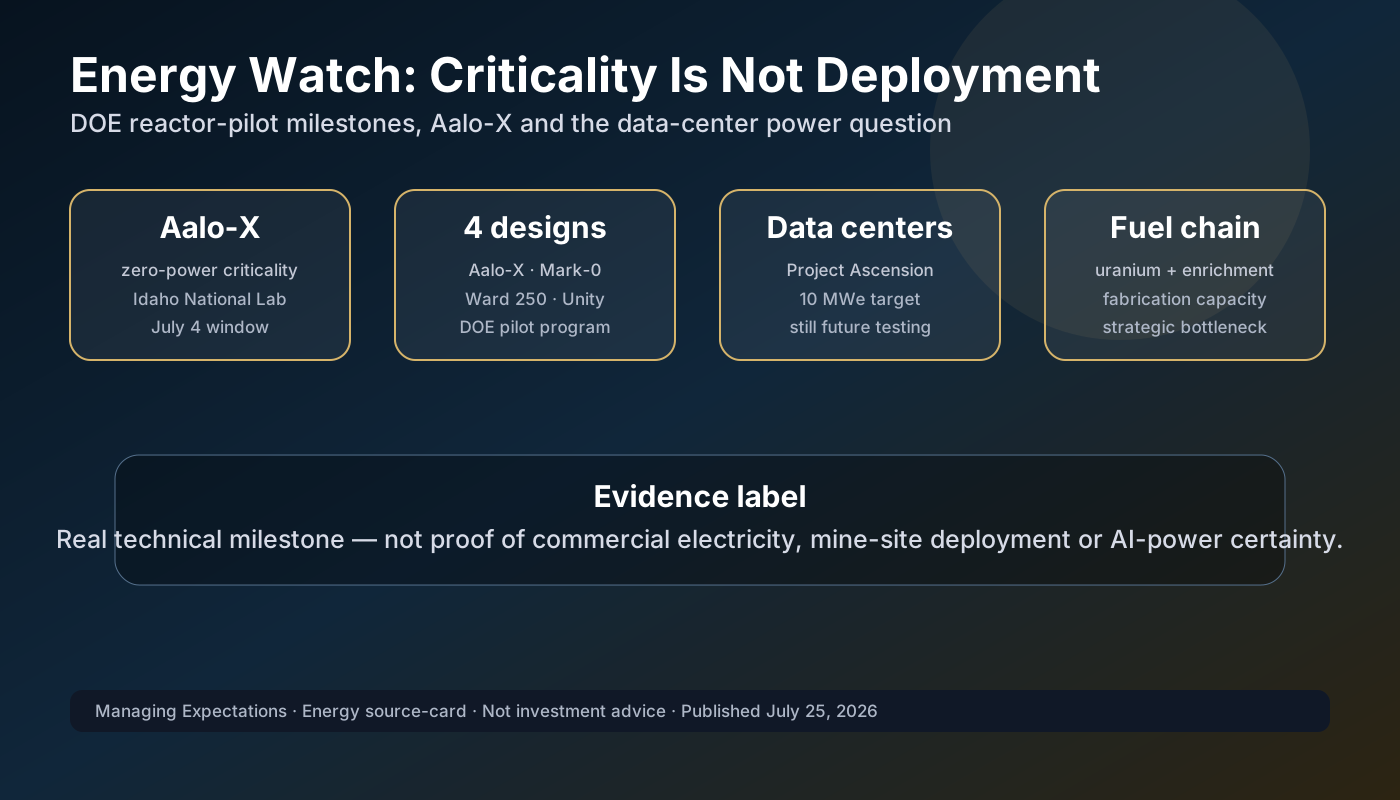
The useful headline is not “nuclear solved AI power.” The source-backed headline is narrower and more interesting: the U.S. Department of Energy says four advanced microreactor designs in its Reactor Pilot Program reached zero-power criticality by the July 4 target window, including Aalo Atomics’ Aalo-X at Idaho National Laboratory.
That is a real technical and regulatory-process milestone. It proves a reactor core can sustain a controlled chain reaction under the authorized test conditions. It does not prove a bankable power plant, data-center power purchase agreement, repeatable factory build-out, fuel-chain depth or mine-site deployment.
Verified milestone
DOE’s Office of Environmental Management says Aalo-X, Antares Nuclear’s Mark-0, Valar Atomics’ Ward 250 and Deployable Energy’s Unity achieved criticality under the Reactor Pilot Program by the July 4 deadline.
What criticality means
DOE explains criticality as a stable chain reaction: each fission event releases enough neutrons to keep one additional atom splitting. These were zero-power demonstrations, not commercial electricity delivery.
Why data centers care
World Nuclear News and ANS report Aalo’s follow-on plan includes a 10 MWe Project Ascension reactor intended to power an on-site data center, with full-power/commercial steps still ahead.
What changed
DOE’s July 6 announcement says Aalo-X “successfully completed a zero-power fueled criticality demonstration.” DOE’s July 14 EM article then grouped the four milestones together and named the four reactors: Aalo-X, Mark-0, Ward 250 and Unity. Trade reporting adds useful context: World Nuclear News reported Aalo said its critical test reactor reached criticality at 00:20 local time on July 4, and ANS reported Aalo’s test reactor used a full-scale core intended to demonstrate nuclear components of a 10 MWe reactor.
What it means for the Energy watch
- SMR/microreactor reality check: criticality is a stronger milestone than a concept rendering or memorandum of understanding, but it is still upstream of licensed commercial operation and delivered megawatt-hours.
- AI and data-center power: the Aalo case is relevant because its next step is explicitly tied to on-site data-center power. The disciplined question is whether it reaches full-power testing, repeatable manufacturing, fuel supply and cost targets.
- Uranium/fuel-chain angle: rapid microreactor timelines increase the importance of enriched fuel, fabrication capacity, testing infrastructure and regulator confidence. That is a strategic supply-chain issue, not a stock tip.
- Industrial/mining angle: remote mines and industrial heat users should watch the microreactor lane, but only as a future firm-power option until safety case, economics, logistics and local approvals are proven.
Cautions
Do not collapse “criticality” into “commercial deployment.” Do not treat a company’s target dates as guaranteed. DOE authorization for a test program is not the same thing as an NRC commercial operating licence. Data centers may want firm clean power, but signing, financing, siting, fuel, security and interconnection are all separate gates.
Not investment advice: uranium, nuclear developers and data-center energy suppliers can be volatile. This source card is an infrastructure/evidence note, not a recommendation to buy or sell any security.
Primary and reporting sources
- DOE Office of Environmental Management — EM Specialists Help DOE Achieve Criticality Milestones for Advanced Reactors (July 14, 2026).
- DOE — Department of Energy Celebrates Fourth Criticality Ahead of July 4th Goal (July 6, 2026).
- World Nuclear News — Criticality for fourth US microreactor to meet 4 July deadline (July 7, 2026).
- ANS / Nuclear Newswire — Developers, officials talk advanced reactor outlook with NRC (July 23, 2026).
- Managing Expectations source note and checked leads.