A social reel about “The Integraton & Plasma Magic” points to one of the strangest real places in American UFO culture: the Integratron, a white wooden dome in Landers, California. The building is real. Its National Register history is real. Its creator, George Van Tassel, was a real aviation worker and UFO contactee figure. The alien instructions, Venus encounter, rejuvenation machine, antigravity and time-travel claims remain claims. That distinction is the entire Managing Expectations lesson.
Evidence label
Supported: George Van Tassel built the Integratron, organized Giant Rock Spacecraft Conventions, published contactee material, and the site is listed in the National Register of Historic Places. Not proven by the reel: extraterrestrial engineering, plasma healing, time travel, antigravity, or cell rejuvenation.
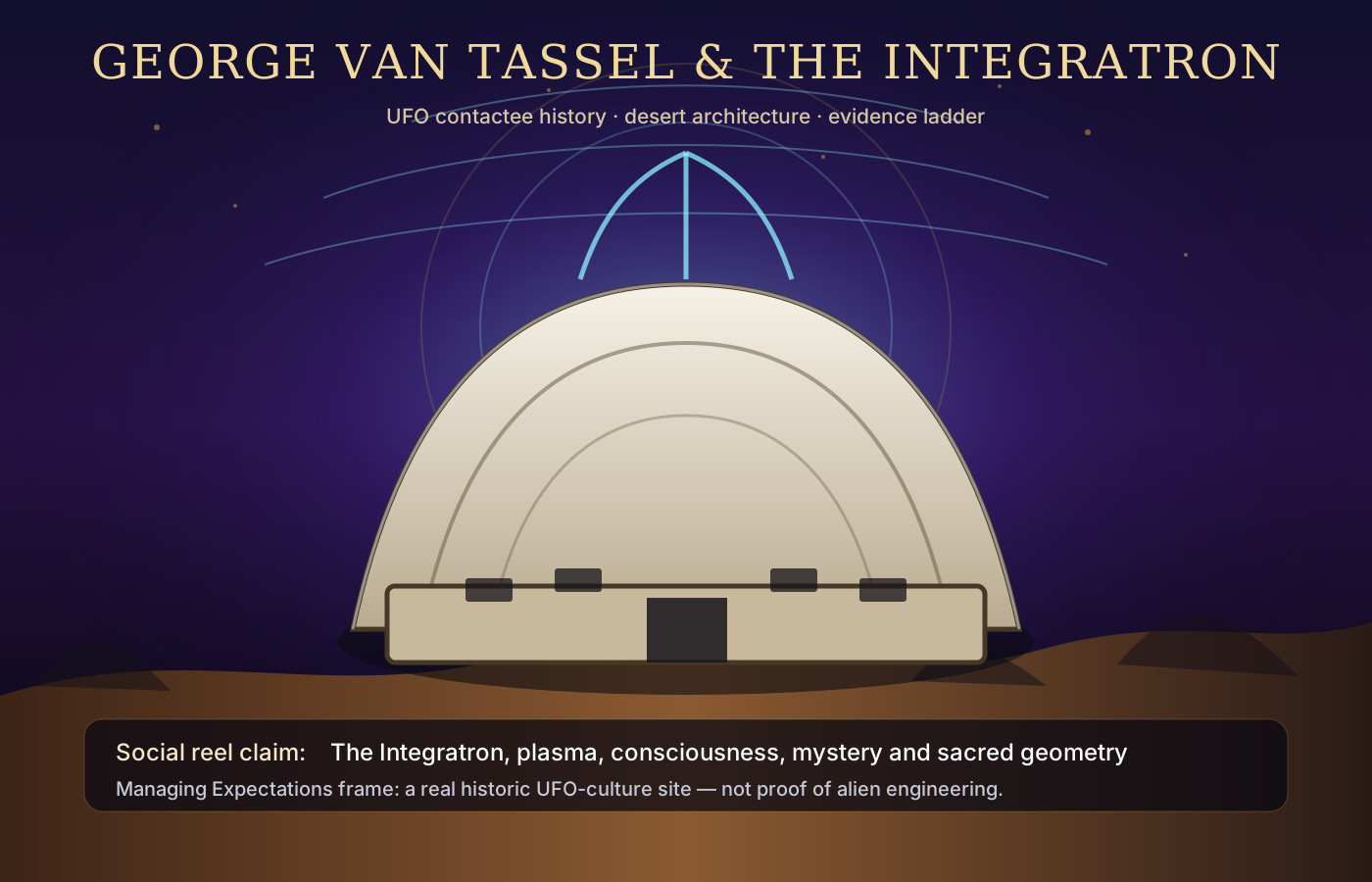
The reel
The Instagram reel from Dana Kippel / @dana.thealien presents the Integratron through a mystical frame: plasma, consciousness, mystery and sacred geometry. Public metadata captured the caption as “The Integraton & Plasma Magic” with hashtags including #plasma, #mystical, #consciousness, #mystery and #sacredgeometry. The visible video frame showed the Integratron’s National Register page and the phrase “Humanity Through Resonance.”
The reel is a useful lead, not a verdict. It sends us toward the real history of the site and its creator: George Wellington Van Tassel.
- Social lead: Instagram reel: The Integratron & Plasma Magic
- Local source note: Research note and source capture
- Metadata extract: Instagram public metadata
Who was George Van Tassel?
George Wellington Van Tassel (1910–1978) was one of the most important figures in the mid-century American UFO contactee movement. The official Integratron history describes him as an author, inventor, controversial UFO advocate and aviation-world figure who worked for Lockheed, Douglas Aircraft and Howard Hughes’s Hughes Aviation. The National Register nomination describes him more carefully as an aerospace industry lead man and test flight inspector.
Van Tassel’s story belongs to the desert. In 1947, around the beginning of the modern flying-saucer era, he and his family relocated from Los Angeles to the Giant Rock area in the Mojave Desert. Giant Rock was already strange geography: an enormous boulder, desert airstrip, café, and subterranean rooms excavated by prospector Frank Critzer. Van Tassel’s family took over the site and turned it into a gathering place.
By the early 1950s, Van Tassel was conducting weekly meditation sessions beneath Giant Rock. He claimed those sessions led to UFO contact and channelled communications. He later said that in August 1953, a craft from Venus landed, woke him, and brought him aboard. According to the official Integratron history, Van Tassel said beings gave him a formula for a frequency that could rejuvenate living cell tissue.
That is where the source labels matter: the meditation sessions, conventions, writings and building project are historical. The Venus encounter is Van Tassel’s claim.
Giant Rock and the contactee era
Van Tassel’s annual Giant Rock Spacecraft Conventions became a major node in postwar UFO culture. The official Integratron history says the conventions ran for 23 years and were attended by tens of thousands across two decades, with one 1959 convention reportedly drawing 11,000 people. These conventions helped fund the Integratron project and connected Van Tassel to other contactee-era figures.
This was the age when UFO reports, Cold War anxiety, atomic fear, metaphysical religion, experimental energy ideas and anti-establishment curiosity all mixed together. Contactees did not merely say “I saw a light.” They often brought full cosmologies: space brothers, Venusian messages, warnings about war, sacred geometry, vibrations, antigravity, hidden energy, and spiritual evolution.
Van Tassel’s version had engineering ambition. He did not only preach. He built.
The Integratron: what it physically is
The Integratron is located at 2477 Belfield Boulevard in Landers, California, north of Joshua Tree. The official Integratron history describes it as a one-of-a-kind, all-wood dome, 38 feet high and 55 feet in diameter. The National Register form says it was originally called the College of Universal Wisdom Research Laboratory.
Van Tassel designed it as an electromagnetic human-cell regenerator, with claimed peripheral capabilities involving antigravity and time travel. The National Register form states that construction began in 1958; the dome was completed by 1960; Van Tassel kept adding elements toward the machine’s function until his death in 1978; and the machine was ultimately unfinished.
The building matters even if one rejects every alien claim. It is a physical artifact of the contactee era: a built object where UFO religion, desert architecture, amateur engineering, sacred geometry and postwar technological imagination meet.
Why the National Register listing matters
The Integratron was listed in the National Register of Historic Places in 2019. That does not mean the U.S. government validated extraterrestrial contact. It means the site has recognized historical significance.
The National Register form is clear about why: the Integratron has distinct, significant and direct associations with post-World War II ufology, with George Van Tassel, and with its unusual design/construction. In other words, it is historically important as UFO culture and architecture, not as official proof of aliens.
A historic-place listing can prove a site matters. It cannot, by itself, prove the metaphysical explanation attached to the site.
Van Tassel’s claims
Van Tassel’s claim-world included several layers:
- Extraterrestrial contact: he claimed a craft from Venus landed near Giant Rock and that he received instructions from non-human beings.
- Ashtar / space people: the National Register form notes Ashtar as one of the primary space people Van Tassel channelled in the College of Universal Wisdom context.
- Rejuvenation: the Integratron was meant to recharge or regenerate human cells through electrostatic/frequency effects.
- Antigravity and time travel: the National Register form summarizes the Integratron as having claimed peripheral capabilities related to antigravity and time travel.
- Geomagnetic location: the official site emphasizes the Landers location and geomagnetic forces as part of the building’s supposed function.
These claims are historically important because Van Tassel made them and built a movement around them. They are not scientifically established by the fact that he made them.
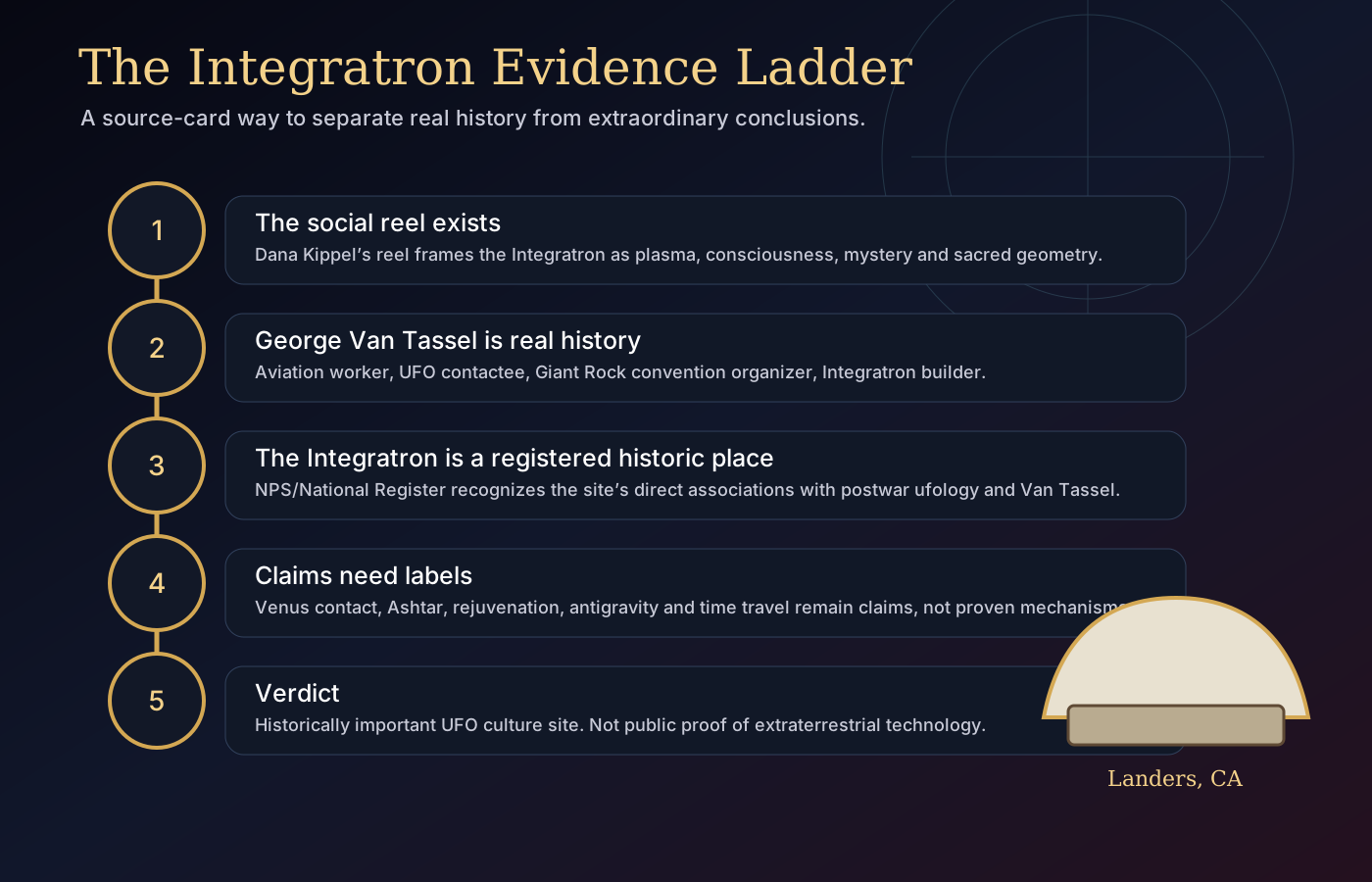
What the evidence supports
| Claim | Evidence status | Managing Expectations reading |
|---|---|---|
| The Integratron exists in Landers, California. | Strongly supported. | Real site, real structure, real public history. |
| George Van Tassel built it and led UFO contactee activity. | Strongly supported. | A key figure in contactee-era UFO culture. |
| The site is historically recognized. | Strongly supported by NPS/National Register. | Historic recognition of cultural significance, not alien verification. |
| Extraterrestrials gave Van Tassel technical instructions. | Claimed by Van Tassel / site tradition. | Historically important claim; not independently proven. |
| The dome rejuvenates cells, enables time travel or antigravity. | Not demonstrated in public evidence. | Treat as metaphysical/technical claim requiring proof. |
| Modern sound baths have unusual acoustics. | Supported as current site use and visitor experience. | Acoustics can be real without validating alien origin stories. |
Why the story keeps working
The Integratron story survives because it hits several powerful expectations at once: the desert as sacred laboratory, the inventor as outsider, the dome as machine-temple, the government as insufficient authority, aliens as teachers, sound as healing, geometry as hidden law, and a building that still stands as a physical witness.
Most internet claims disappear when the phone scrolls past. The Integratron is different. You can visit it. You can stand inside it. You can hear its acoustics. That physical reality gives the surrounding myth more emotional weight. But emotional weight is not evidentiary weight.
The responsible UAP/alien-section framing
Van Tassel should not be dismissed as “just crazy,” because that lazy conclusion misses the cultural history. He helped build a real movement. He produced writings, gatherings, architecture and a lasting pilgrimage site. He belongs in any serious study of the American contactee tradition.
But he should not be upgraded into proof of extraterrestrial engineering either. The right category is:
George Van Tassel is a historically important UFO contactee whose claims produced a real architectural artifact. The artifact verifies the movement. It does not verify the aliens.
Managing expectations
The Integratron is a perfect Managing Expectations case because every layer tempts a leap. A real National Register listing becomes “the government knows.” A real dome becomes “the machine works.” A real aviation résumé becomes “the alien engineering was credible.” A real sound experience becomes “frequency healing is proven.”
The discipline is to keep each claim in its proper box. Van Tassel’s history is real. The Integratron is real. The cultural significance is real. The public proof of extraterrestrial instructions is not there.
That does not make the story useless. It makes it useful in a more mature way. It shows how human beings build temples at the edge of uncertainty — and how quickly a structure designed for meaning can be mistaken for evidence.
Source links
- Instagram reel: Dana Kippel / The Integratron & Plasma Magic
- Official Integratron history
- Official Integratron timeline
- National Park Service / National Register asset detail
- National Register of Historic Places registration form PDF
- Spaces Archives: George Van Tassel and the Integratron
- Internet Archive: George Van Tassel FBI file
- Local source note
UAP / UFO Research: People, Films & Sightings
Continue the Managing Expectations UAP/aliens series: curiosity preserved, evidence labels intact.
Back to UAP Topic