Energy / SMRs / siting / data-center power
Indiana’s “Nuclear Ready” Communities: A Real Siting Signal, Not a Reactor Build Yet
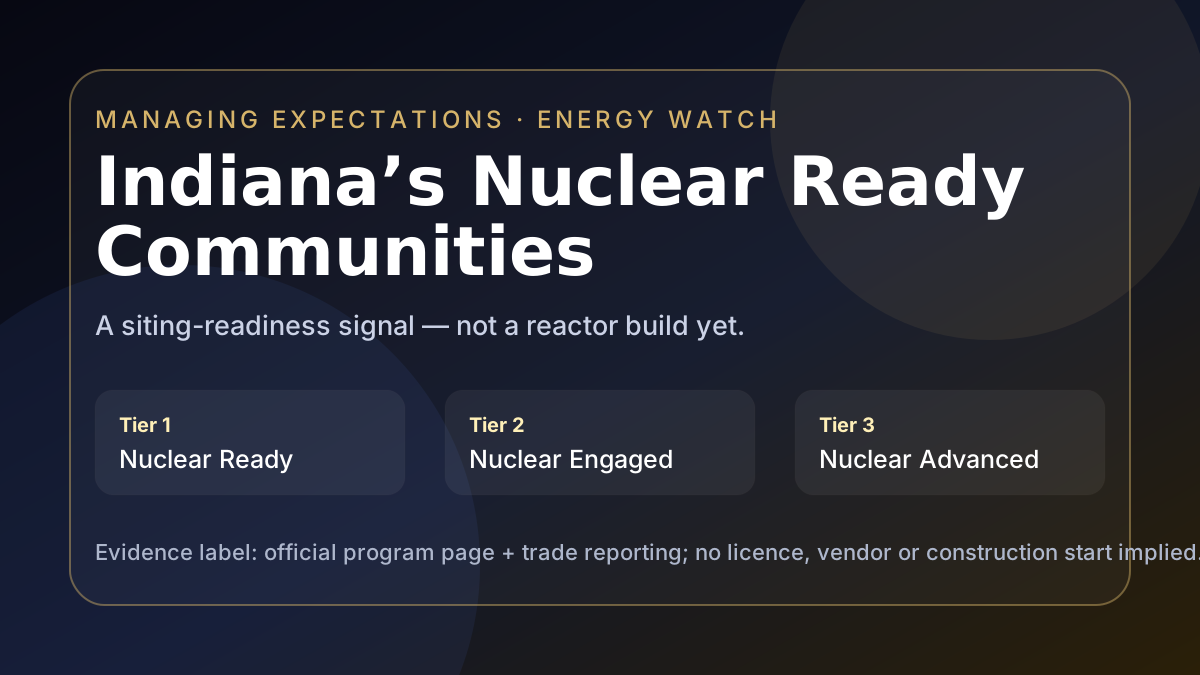
The useful headline is not “Indiana is building SMRs.” The source-backed headline is narrower: Indiana’s Office of Energy Development now has a Nuclear Ready Communities program that lets cities, counties and townships pursue tiered state designations for advanced-nuclear readiness.
That matters because nuclear deployment is not only reactor design. It is also land, grid access, workforce, local politics, emergency planning, developer agreements and trust. Indiana is trying to make those local siting signals visible before a project arrives.
Verified official source
Indiana OED describes a three-tier designation system for communities taking measurable steps to welcome advanced nuclear energy development.
Three tiers
The program page lists Nuclear Ready (Tier 1), Nuclear Engaged (Tier 2) and Nuclear Advanced (Tier 3), tied to readiness milestones and resources.
Why data centers appear
OED explicitly frames the program around grid transition, accelerating data-center demand and Indiana’s position at the PJM–MISO seam.
What changed
OED’s program page says communities can be recognized for readiness work that includes stakeholder organization, site readiness, workforce development and formal agreements with developers. ANS/Nuclear Newswire reported July 24 that Indiana had launched the designation system and described it as a way to give developers a quick signal about infrastructure, regulatory engagement, workforce capacity and local support.
The Daily Journal also surfaced the issue on July 26, but its page returned HTTP 403 during terminal verification, so it is treated here as a live-news lead rather than a factual anchor.
What it means for the Energy watch
- SMR deployment is becoming a local-government problem: reactor vendors can announce designs, but communities still need zoning, emergency planning, workforce pipelines and political consent.
- Data-center power demand is shaping policy: Indiana’s official page explicitly names accelerating data-center demand. The point is firm power readiness, not a guarantee that AI campuses will be nuclear-powered.
- Canada and mining should watch the pattern: remote mines, heavy industry and power-hungry data infrastructure may eventually need similar “ready community” checklists before SMRs become practical options.
- Fuel-chain implications remain indirect: more serious siting pipelines would increase attention on uranium, enrichment, fabrication and transport rules — but this article is not a stock or commodity call.
Cautions
A readiness badge is not a reactor licence. It does not identify a selected reactor vendor, prove a commercial operating case, create a power purchase agreement, solve waste/fuel logistics or remove federal nuclear-safety review. It is a siting and coordination signal.
Not investment advice: uranium, advanced-nuclear developers, utilities and data-center power suppliers can be volatile. This source card is an infrastructure/evidence note, not a recommendation to buy or sell any security.