It Could Happen to You belongs on the Managing Expectations movie shelf because it is built around one of the simplest moral tests in storytelling: a person makes a small promise when it costs almost nothing, then discovers keeping it will cost everything.
Source-card caution
This is a movie interpretation card, not a documentary file. Public summaries describe the plot as inspired by a real-life news story, but the film should be treated as a dramatized romantic comedy-drama about character, generosity, marriage pressure and money.
The film in plain English
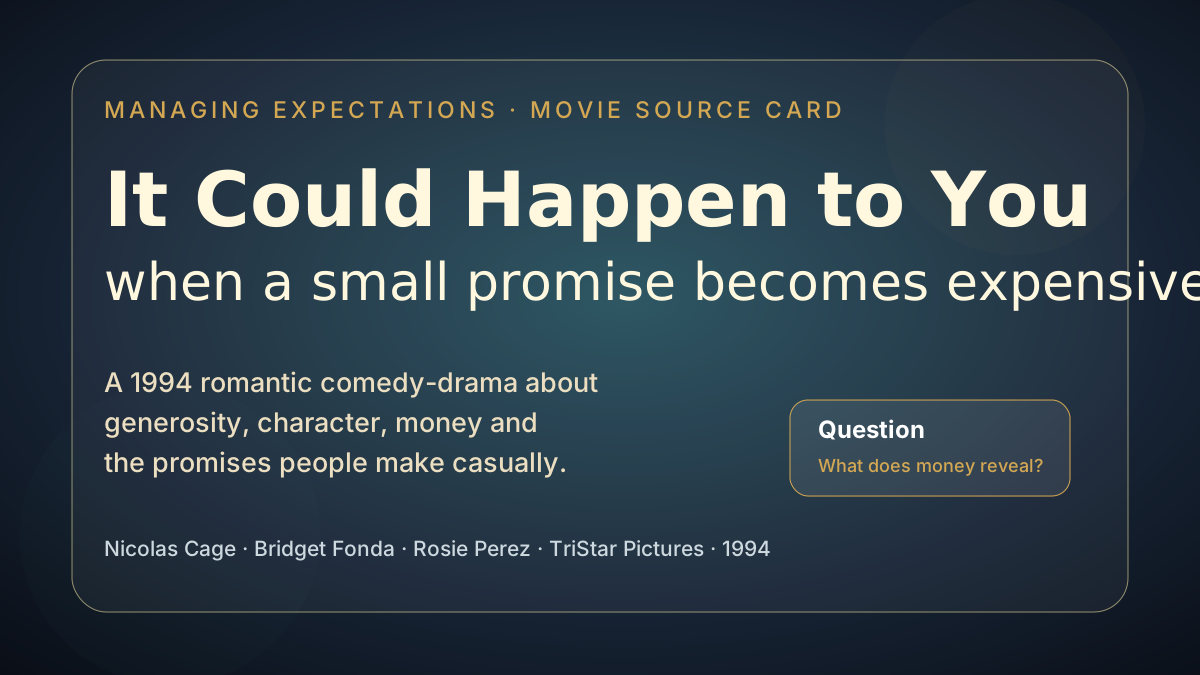
It Could Happen to You is a 1994 American romantic comedy-drama directed by Andrew Bergman and written by Jane Anderson. It stars Nicolas Cage as New York police officer Charlie Lang, Bridget Fonda as waitress Yvonne Biasi, and Rosie Perez as Charlie's wife Muriel.
The setup is almost a parable: Charlie cannot leave a cash tip, so he promises Yvonne half of his lottery winnings if his ticket wins. Then it wins. The rest of the film asks whether a promise made lightly remains binding when it becomes life-changing.
Why it belongs on Managing Expectations
The film is not just about luck. It is about expectation. People expect lottery money to solve problems, expose opportunity and make life easier. In this story, money does the opposite: it reveals what was already present inside each person.
| Expectation | What the movie tests |
|---|---|
| A casual promise is harmless. | It becomes a moral contract once real money appears. |
| Money changes people. | The film suggests money reveals what was already there: generosity, resentment, greed, gratitude or grace. |
| Kindness is small. | A small act of kindness becomes the hinge of the entire story. |
| Winning means freedom. | Winning also brings conflict, public attention, moral pressure and relationship fracture. |
The character test
Charlie is interesting because the promise is not strategic. He is not trying to become a hero. He is trying to be decent in a small awkward moment. That is the point. Many people can be generous in fantasy; fewer remain generous when the fantasy becomes a bank balance.
The movie's emotional power comes from the gap between what society expects and what Charlie does. The expected move is to rationalize: the waitress did not really earn half, the promise was a joke, the money belongs to the ticket-holder. The unexpected move is to treat the promise as real.
Money as a revealer
Lottery stories often sell escape: win money, exit your ordinary life, become someone new. It Could Happen to You is gentler and sharper. It shows money amplifying what already exists. For Charlie, it amplifies conscience. For Yvonne, it restores dignity after being ignored and mistreated. For Muriel, it exposes hunger for status, control and a different life.
That makes the film useful for Managing Expectations: do not expect money to create character. Expect it to reveal character.
The romantic expectation
There is also a romantic expectation underneath the plot. The story invites the audience to believe that kindness can recognize kindness. Charlie and Yvonne are not drawn together only by money. They are drawn together by a shared moral temperature: gratitude, modesty, decency and a belief that people should be better than the transaction in front of them.
That is why the film still works as a story card. Its optimism is not naive because it ignores selfishness. Its optimism survives because it puts selfishness on screen and then asks whether goodness can still be chosen.
Use with care
Because the plot is inspired by a real-life incident, it is tempting to treat the film like a verified moral report. Do not. Use it as a dramatic meditation on promise-keeping. Keep the movie, the real-life inspiration, and the Hollywood romance in separate boxes.
Discussion questions after watching
- What would you do if a joke-promise suddenly became expensive?
- Does money change Charlie, Yvonne and Muriel, or reveal them?
- When does generosity become foolish, and when does caution become selfish?
- What is the difference between a legal obligation and a moral one?
- Why do stories about unexpected generosity still feel surprising?
Bottom line
It Could Happen to You is a sweet movie with a serious Managing Expectations question at its center:
What kind of person are you when the promise you made casually becomes expensive to keep?
That is why the film belongs on the shelf. Not because everyone should split a lottery ticket with a stranger, but because the story reminds us that character is often proven by the promises we made before we knew what they would cost.
Source links
- Wikipedia: It Could Happen to You (1994 film)
- Box Office Mojo: It Could Happen to You
- IMDb: It Could Happen to You
- Local source note
Movies shelf
Back to Managing Expectations movies: films worth discussing because they test the stories people tell themselves when expectations collapse.
Back to Movies