Mercury / dimethylmercury / lab safety / cancer toxicology
Karen Wetterhahn and Dimethylmercury: The Scientist, the Cancer Work, and the Safety Lesson
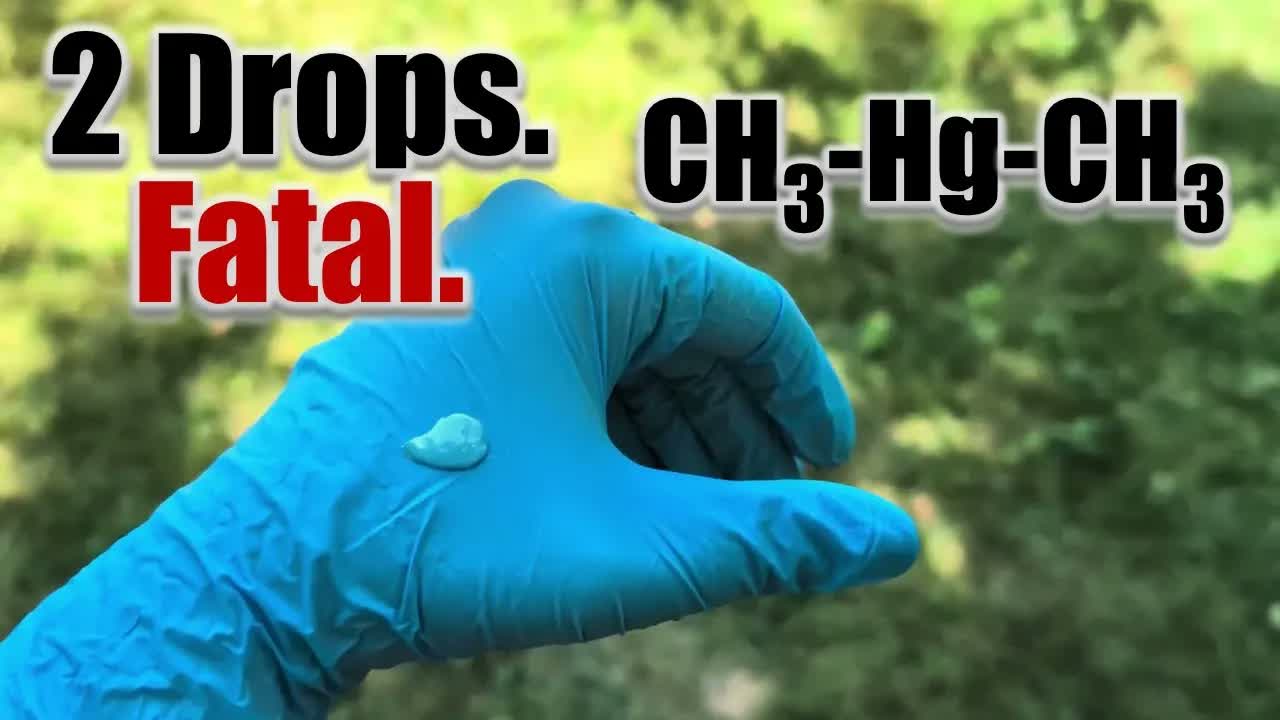
The YouTube headline sounds like a chemistry horror story. The deeper story is more important: Karen Wetterhahn was not careless. She was one of the people who understood toxic metals best. Her death showed that a safety rule can be followed perfectly and still be wrong.
The person
Wetterhahn was a Dartmouth chemistry professor, cancer-toxicology researcher, first woman hired tenure-track in Dartmouth chemistry, and founder of the Toxic Metals Superfund Research Program.
The exposure
In August 1996, dimethylmercury contacted her latex-gloved hand while she was preparing a mercury NMR standard. Later testing showed the glove barrier was inadequate.
The legacy
NEJM, OSHA and C&EN records show the case changed lab-safety expectations around supertoxic organomercury compounds, glove compatibility and substitute standards.
The cancer work before the accident
Wetterhahn’s relevance to a cancer file is not that mercury treated cancer. It did not. Her relevance is the opposite: she studied how toxic metals can damage living systems and contribute to cancer. Dartmouth says her primary research examined how chromium and nickel cause cancer in humans, especially how cells metabolize those metals. PubMed indexes her 1989 paper with Joshua W. Hamilton on the molecular basis of hexavalent chromium carcinogenicity and gene-expression effects.
The scientific question was blunt: how can a metal become a carcinogen inside a cell? Her chromium work helped frame the “uptake-reduction” model. Chromium(VI) enters cells as chromate; inside the cell, reduction reactions can generate reactive intermediates, radicals and chromium-DNA lesions. That is cancer biology at the level where chemistry meets DNA.
What happened in the lab
On August 14, 1996, Wetterhahn was preparing dimethylmercury for mercury NMR work. The video says “two drops”; the source record is safer as “one to several drops” or a small spill. The important part is not the exact drop count. It is that the material touched latex gloves, and the accepted safety advice of the day did not protect her.
OSHA later described dimethylmercury as readily absorbed through skin, volatile enough for inhalation risk, and able to permeate materials including plastics and rubber. OSHA’s bulletin says latex, neoprene and butyl gloves do not provide suitable protection for direct contact; Silver Shield laminate gloves under abrasion-resistant outer gloves became the relevant control.
The delayed poisoning
Months passed before the danger became visible. The NEJM case report describes delayed cerebellar disease after accidental exposure. Blood mercury and urine mercury were extremely elevated, and hair analysis helped reconstruct the exposure window. Chelation increased mercury excretion, but her neurological decline continued. She entered a devastating neurological state and died June 8, 1997, about ten months after exposure.
The people around the case
- David W. Nierenberg, a Dartmouth-Hitchcock physician with clinical toxicology training, helped care for Wetterhahn and became lead author of the NEJM case report.
- Michael B. Blayney, then leading Dartmouth environmental health and safety, commissioned glove testing that showed the PPE failure; C&EN later identified him as a research-safety leader at Northwestern.
- John S. Winn, Dartmouth chemistry chair/emeritus professor, helped carry Wetterhahn’s warning outward. C&EN reports she asked that her lab members be tested and that the chemistry community be told.
- Thomas V. O’Halloran and other mercury NMR researchers moved toward safer standards after the case forced the field to ask whether dimethylmercury was necessary.
- Ke Jian “Jim” Liu, a Dartmouth collaborator, continued heavy-metal toxicology questions after Wetterhahn became ill.
- Carol Folt and Celia Y. Chen sit in the broader legacy chain: C&EN reports Folt as a collaborator and Chen as the last director of the Dartmouth Toxic Metals Superfund Research Program.
What changed
Dartmouth was inspected by OSHA and fined. The college had to revise safety procedures and hire a new chemical safety official. OSHA issued its dimethylmercury hazard bulletin in 1998. Chemistry labs became more disciplined about glove compatibility, safety data sheet limits, substitute standards, and the difference between “a glove” and the right glove for a specific molecule.
Wetterhahn’s scientific program also continued. Dartmouth and NIEHS describe her Toxic Metals Superfund Research Program as a major interdisciplinary project, and Dartmouth memorialized her with fellowships and awards. That is the hard part of the story: the accident ended a life, but the warning she wanted shared kept protecting other people.
Managing expectations
The lesson is not fear of chemistry. The lesson is humility in front of materials that outrun ordinary intuition. Mercury can be beautiful, useful, medically relevant, industrially important and deadly at the same time. In this case, wonder is not the point. The point is that the evidence changed the safety rule.
This is why the mercury section needs both folklore correction and real tragedy. Red-mercury myths make mercury sound powerful in the wrong way. Wetterhahn’s case shows power in the real way: a molecule small, fat-soluble and volatile enough to defeat the safety assumptions of experts.
This article is not medical advice, lab-handling advice, or a buying guide. Dimethylmercury is a supertoxic organomercury compound. Do not handle, seek, buy, harvest or experiment with mercury compounds outside properly licensed professional settings.
Primary and research sources
- Chemistry in a Nutshell — 2 Drops of Dimethylmercury: The Death of Dr. Karen Wetterhahn (YouTube lead; metadata/transcript preserved).
- Nierenberg et al., NEJM 1998 — Delayed cerebellar disease and death after accidental exposure to dimethylmercury.
- OSHA Hazard Information Bulletin — Dimethylmercury.
- OSHA inspection detail — Dartmouth College Burke Laboratory.
- Dartmouth Toxic Metals — Tribute to Karen Wetterhahn.
- C&EN — 25 years after Karen Wetterhahn died of dimethylmercury poisoning.
- Wetterhahn & Hamilton 1989 — Molecular basis of hexavalent chromium carcinogenicity.
- Managing Expectations source note and checked source package.