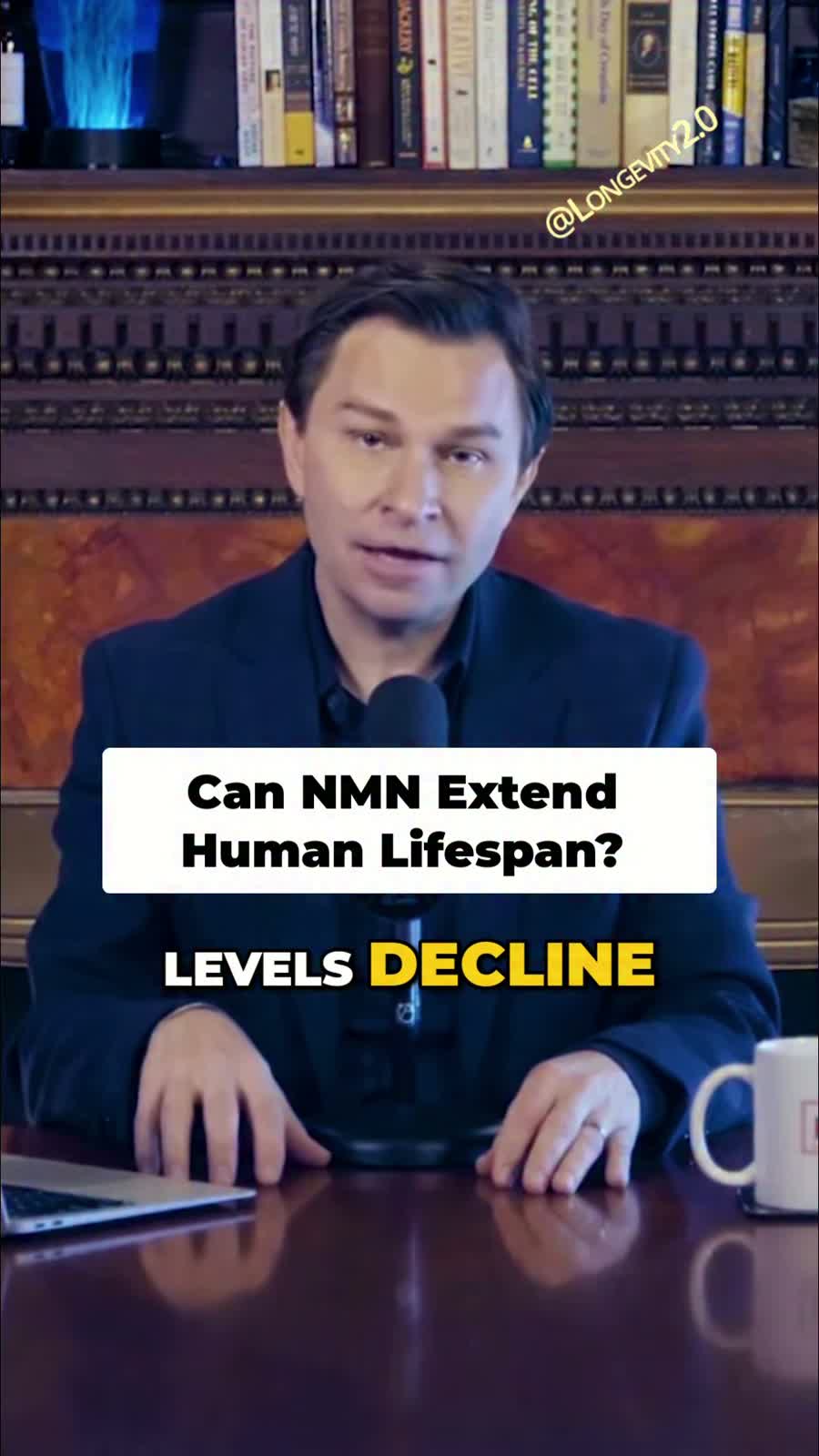
Chris sent a Facebook Reel from The Longevity Experts about David Sinclair, NAD, NMN and NR. This one is not pure nonsense: NAD biology is real, NMN and NR are genuinely studied, and the Reel correctly points to an actual randomized human NMN study. The careful takeaway is still: promising early biology, not proven human age-reversal medicine.
Medical caution
This is source review and science-literacy commentary, not medical advice, supplement guidance, dosing guidance, treatment advice or a recommendation to use NMN, NR or any longevity product. Personal health decisions belong with qualified clinicians.
What the Reel claims
The Reel says NAD levels decline with age and asks whether restoring those levels can support the body’s longevity pathways. It then points to NAD precursors or “boosters” such as NMN and NR. The transcript says animal studies have reported restored NAD levels, enhanced insulin sensitivity, less frailty, better mitochondrial function, higher activity and promising lifespan signals.
The human-study hook is more specific: it cites Yoshino et al. 2021, a randomized placebo-controlled NMN study, and says it found improved insulin-stimulated glucose disposal.
What is real
NAD is a real cellular molecule involved in energy metabolism, redox reactions and repair-related pathways. Scientists are legitimately studying whether age-related changes in NAD metabolism can be targeted in disease, frailty, metabolic health or aging biology.
The Reel’s cited human study is real. In 2021, Science published Yoshino et al., “Nicotinamide mononucleotide increases muscle insulin sensitivity in prediabetic women.” It was a short randomized placebo-controlled trial in a narrow population: postmenopausal women with prediabetes. That matters. A real result in a defined group is not the same thing as proof that everyone should take a supplement for decades.
NR is also real science. Human studies and reviews have reported that NR can raise NAD-related metabolites and may influence some biological pathways, but reviews still emphasize that the clinical meaning of those changes is not fully settled.
What is still not proven
The biggest leap is from biomarkers and short trials to long-term human aging outcomes. Better NAD markers, insulin-sensitivity signals or mitochondrial measures do not automatically prove fewer heart attacks, less dementia, longer lifespan or longer healthspan.
Mouse results are useful for generating hypotheses, but mice are not small humans. Many anti-aging effects that look exciting in animal models shrink, disappear, or become more complicated in human trials.
Researchers still need better answers on who benefits, what outcomes matter, whether effects last, how safety looks over years, and whether consumer products match clinical-grade study conditions.
Evidence labels
- Verified: The Facebook Reel exists and frames the claim around David Sinclair, NAD, NMN and NR.
- Verified: Yoshino et al. 2021 was a randomized placebo-controlled human NMN trial in postmenopausal women with prediabetes.
- Supported but limited: NMN and NR can affect NAD-related biology in some animal and human studies.
- Not proven: NMN or NR as broad human age-reversal medicine, lifespan extension, disease prevention, or a decades-long consumer anti-aging strategy.
- Marketing caution: The Reel is more careful than many supplement clips, but it still functions as a newsletter/lead-generation post in a supplement-heavy online ecosystem.
Primary links
- Facebook Reel: The Longevity Experts on NAD, NMN and NR
- Science 2021: NMN increased muscle insulin sensitivity in prediabetic women
- Advances in Nutrition 2023: NMN human clinical-trial safety/antiaging update
- Science Advances 2023: What is really known about NR supplementation in humans
- Nature Communications 2018: NR was well tolerated and elevated NAD+ in healthy middle-aged/older adults
- Nature Aging 2025: Emerging strategies and challenges of targeting NAD+ in the clinic
- Local source note and transcript
Bottom line
The Reel is worth saving because it points to a real research frontier. But the correct expectation is not “take NAD boosters and reverse aging.” It is: NAD boosters are biologically plausible and actively studied; early human evidence exists for selected markers; long-term human anti-aging benefit remains unproven.
Health Papers, Studies & Films
Continue the source library for health papers, studies, documentaries, interviews and medical controversies.
Back to Health Section