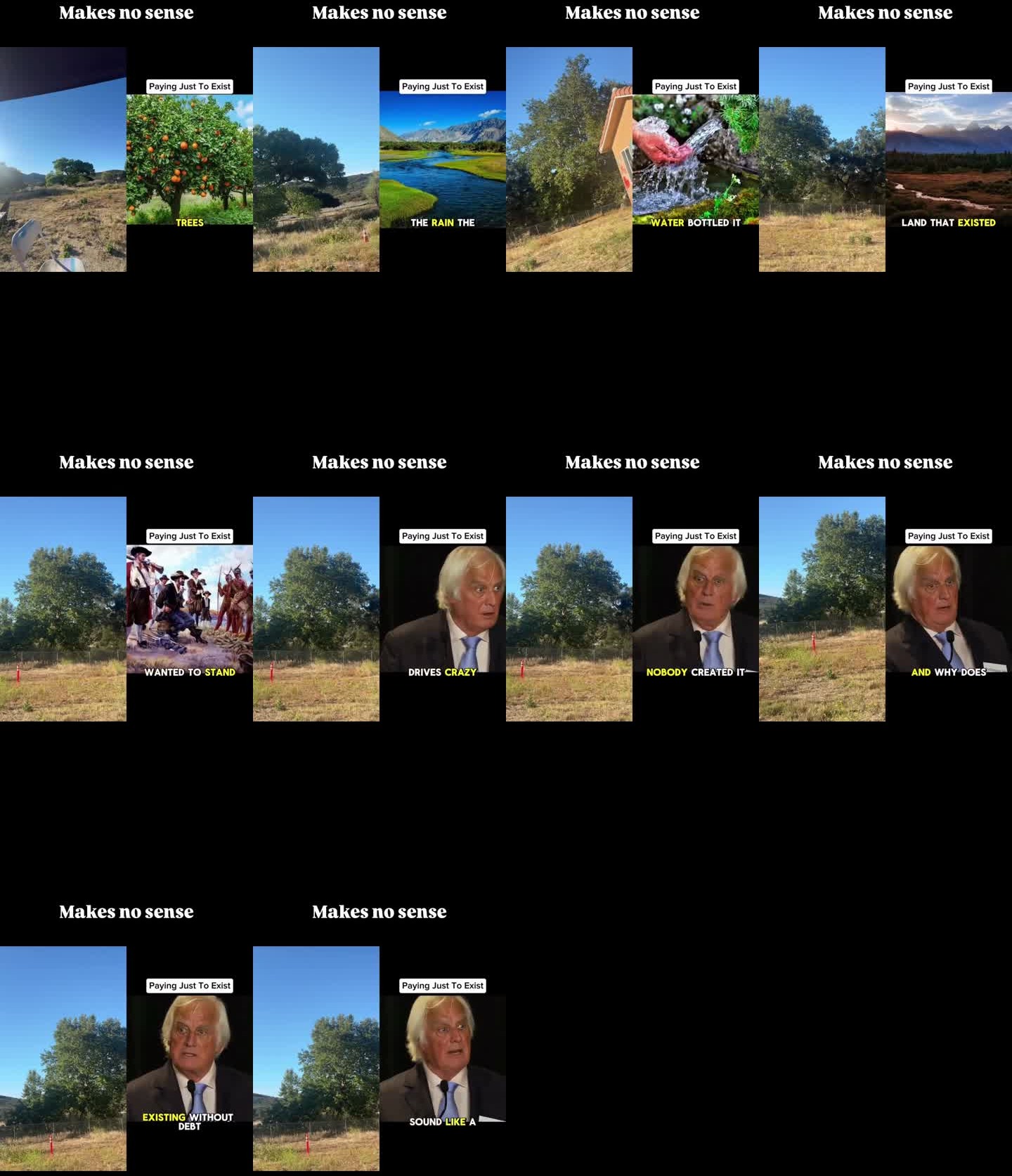
The Instagram reel asks a simple but uncomfortable question: if trees, water, land, food and shelter were already here, why are human beings born into a world where access to basic survival is mediated by bills, debt, rent, taxes, licences and permission?
The core line
“Everything you need to survive — water, food, shelter — was already here. Nobody created it, but somehow you were born owing for it.”
What the reel is really saying
The clip is not a technical policy paper. It is a moral protest. It says modern life has converted necessities into toll booths: fruit becomes a product, water becomes a bottle, land becomes a payment plan, and shelter becomes a lifetime debt instrument.
The strongest version of the argument is not “nobody should ever pay for anything.” The strongest version is: a society that makes basic survival permanently conditional on debt and permission should not call itself fully free without scrutiny.
The difference between stewardship and extraction
Human beings need systems. Water infrastructure has to be built and maintained. Farms require labour. Houses require materials, trades and land-use planning. Property records prevent some conflicts. Taxes can fund services. The freedom problem begins when systems meant to steward life become systems that extract from life.
That is the line worth watching: does the system help people live responsibly, or does it make ordinary existence feel like a subscription service?
Water: a natural necessity turned into an access question
Water is not created by a corporation or a state. But clean, reliable water delivery involves wells, pipes, treatment, storage, testing and maintenance. Paying for infrastructure is not automatically oppression. The danger begins when access is priced, privatized, restricted or bureaucratized in ways that disconnect people from the basic human reality that water is not a luxury.
That is why modern human-rights language often treats water and sanitation as dignity issues, not ordinary consumer goods.
Land: the oldest freedom question
The reel’s line about land is emotionally powerful because land is where freedom becomes physical. You can speak about liberty all day, but if there is nowhere to stand, build, grow, gather, hunt, farm, rest or raise a family without permission, then freedom becomes abstract.
At the same time, land ownership is also how families protect homes, farms and small businesses from arbitrary seizure. So the real issue is not simply “ownership bad.” The real issue is whether ownership, taxation, zoning and Crown/public-land administration leave ordinary people with a real path to independence.
Debt as the invisible fence
Control does not always need chains. Sometimes it uses minimum payments. A person with rent, mortgage pressure, property tax, utilities, insurance, food inflation, transport costs and licence fees may be legally free but practically trapped.
That does not mean all debt is immoral. It means debt should be judged by whether it builds agency or drains it. A mortgage that lets a family root itself can be different from a system where people can never catch up no matter how hard they work.
What a freedom lens should ask
- Can ordinary people still acquire land, build modest shelter and grow food?
- Are water and utility systems priced for dignity or for extraction?
- Do taxes and fees fund visible services, or do they become endless tribute?
- Do regulations protect health and neighbours, or do they block self-reliance?
- Can a family reduce dependency, or is every exit path administratively closed?
Managing expectations
The reel is right to ask why “a free life” sounds unrealistic. But the answer cannot be only nostalgia or rage. The practical freedom program is local and concrete: protect water access, defend small farms and gardens, allow modest housing, preserve rural livelihoods, audit fees and taxes, resist unnecessary licensing, and build communities where people can meet more of their own needs.
Freedom is not just the right to vote or speak. It is also the practical ability to stand somewhere, drink water, grow food, shelter your family and live without every breath being converted into a bill.
Source links
- Original Instagram reel
- Local transcript
- Local source note
- Government of BC: annual property tax
- Government of BC: Crown land and water use
- Canada: National Housing Strategy / rights-based housing language
Freedom section
Source-grounded notes on liberty, responsibility, land, surveillance, due process and civic courage.
Back to Freedom