Energy / maritime SMRs / ports / firm power
Port of Long Beach and MARAD: Maritime SMRs Move From Idea to Testbed
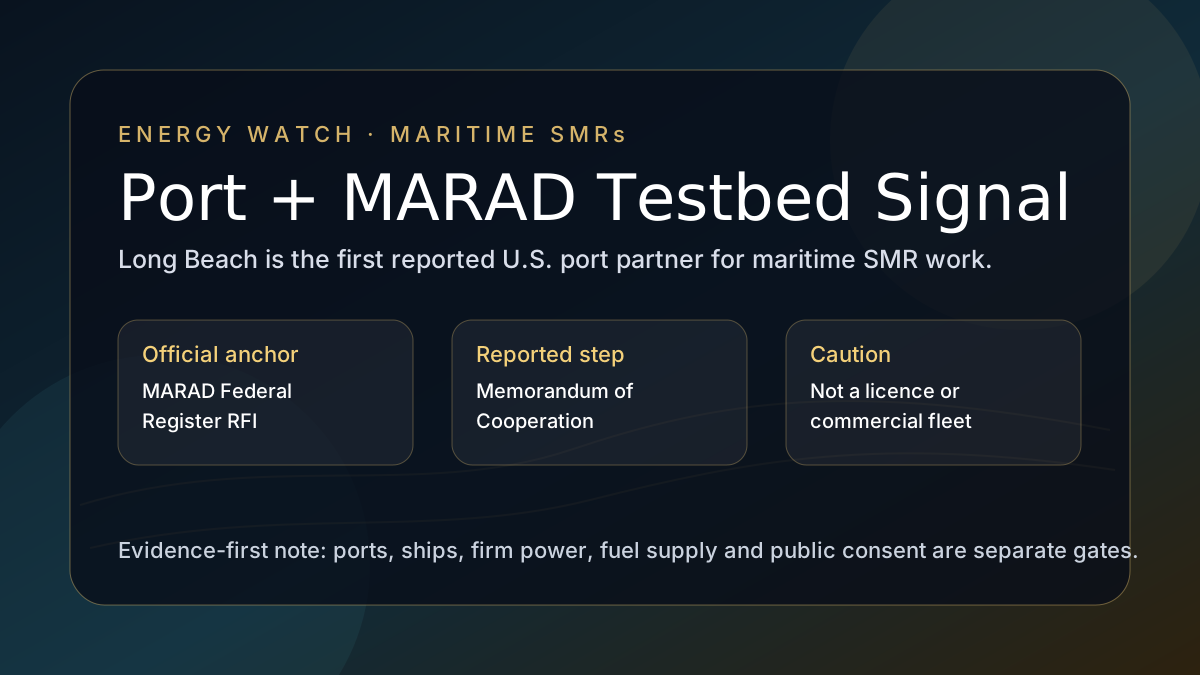
The source-backed headline is narrow but important: the Port of Long Beach has become the first U.S. port reported to sign a Memorandum of Cooperation with the U.S. Maritime Administration to advance small modular reactor work for commercial vessels, ports and other maritime assets.
That does not mean nuclear container ships are about to leave California next month. It does mean maritime SMRs have moved from white-paper territory into a port-and-federal-agency testbed conversation involving port operations, ship power, industrial electricity, classification, safety and public consent.
Verified official anchor
The Federal Register published MARAD’s May 7, 2026 RFI on a commercially viable, system-centric SMR concept for the marine transportation system.
Reported new step
World Nuclear News and maritime outlets report Long Beach signed the first port-MARAD cooperation agreement on maritime nuclear energy.
Why it matters
Ports are energy hubs. If SMRs ever serve ships, terminals, shore power or critical infrastructure, port governance becomes part of the deployment gate.
What changed
World Nuclear News reported July 27 that the Port of Long Beach signed a memorandum of cooperation with the Department of Transportation’s Maritime Administration to work on SMR technology for commercial vessels, ports and other maritime assets. AJOT and gCaptain carried the same core facts from July 22–23 reporting: a non-binding cooperation framework, Long Beach as the first U.S. seaport partner, and a link back to MARAD’s May RFI.
The official federal anchor is the May 7 Federal Register notice. It asked for information on a U.S.-built, scalable and commercially viable SMR concept for the marine transportation system. That makes the Long Beach news a concrete local testbed signal attached to an existing federal solicitation, rather than a standalone port press headline.
What it means for the Energy watch
- SMRs are expanding beyond grid plants: the watchlist now includes ports, ships, floating/barged power modules and shore-power infrastructure, not only utility sites and data centers.
- Industrial power is becoming a siting problem: ports need reliable electricity for cranes, terminals, cold chains, fuels, charging, resilience and future vessel support. A reactor concept still has to clear safety, security, waterfront risk and public-trust gates.
- Fuel-chain pressure remains real: serious maritime or microreactor deployment would add attention to HALEU/enrichment, fabrication, transport, safeguards and waste-handling capacity. That is a strategic supply-chain issue, not a stock tip.
- Mining and remote industry should watch the pattern: if regulators, insurers and communities develop templates for nuclear-powered port infrastructure, similar governance questions will follow mine sites, industrial heat users and remote data campuses.
Cautions
A memorandum of cooperation is not a reactor licence, construction permit, commercial operating approval, port siting decision, power purchase agreement or proof that nuclear-powered commercial shipping is economically ready. The most important follow-up questions are safety case, regulator pathway, vessel classification, liability, emergency planning, security, public consent, fuel supply and who pays.
Access note: MARAD’s newsroom page returned HTTP 403 in terminal verification and the Port of Long Beach site timed out. This source card therefore uses the Federal Register RFI as the official program anchor and treats WNN/AJOT/gCaptain as reporting on the Long Beach agreement.
Not investment advice: uranium, advanced-nuclear developers, maritime technology suppliers and port-infrastructure plays can be volatile. This source card is an infrastructure/evidence note, not a recommendation to buy or sell any security.
Primary and reporting sources
- Federal Register — MARAD RFI: Development of a Commercially Viable System-Centric SMR Concept for the Marine Transportation System (May 7, 2026).
- World Nuclear News — First port signs up to US initiative on maritime SMRs (July 27, 2026).
- AJOT — Port of Long Beach, MARAD sign first-of-its-kind partnership agreement on nuclear energy in maritime (July 23, 2026).
- gCaptain — Port of Long Beach, MARAD launch first U.S. partnership on nuclear-powered shipping (July 22, 2026).
- Managing Expectations source note and checked leads.