Energy / uranium conversion / nuclear fuel cycle / DOE Launch Pad
Raven-Flint’s Uranium Conversion Push: Fuel-Cycle Gate, Not Reactor Power Yet
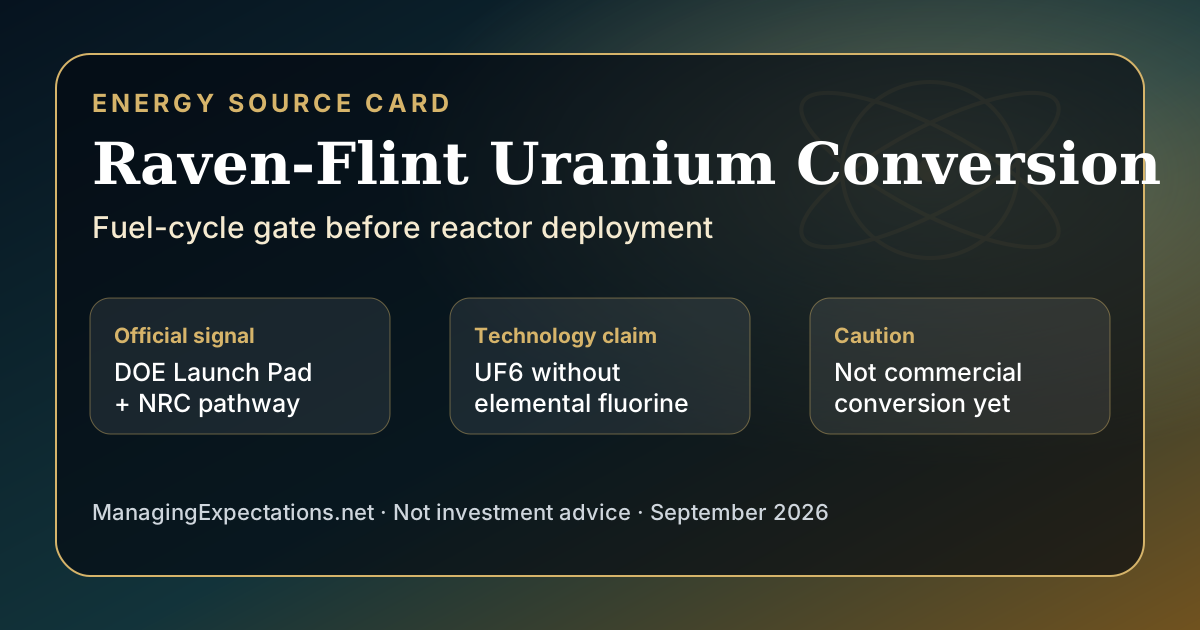
The useful headline is not “new reactors are solved.” It is narrower: Raven-Flint Nuclear is trying to build a missing front-end fuel-cycle link — uranium conversion into UF6 — and now has a cluster of public signals around DOE support, NRC review and lab-scale process claims.
That matters because SMRs, microreactors, mine electrification and data-center firm-power deals all run through a physical supply chain. Before fuel can be enriched and fabricated, uranium oxide generally has to be converted into uranium hexafluoride. If conversion capacity is thin, reactor announcements can outrun the fuel system beneath them.
Official/company signal
Raven-Flint’s August 31 release says it was selected for DOE/NRIC’s Nuclear Energy Launch Pad and successfully produced UF6 using its Corvus Route.
Regulatory gate
The NRC letter-of-intent record describes engineering-scale research at the Idaho Falls MATCH lab, not pilot or commercial conversion operations.
Scale check
Raven-Flint says its Torch pilot plant is designed for 500 tonnes of uranium per year; ANS compares that with a much larger incumbent U.S. conversion plant.
What changed
Raven-Flint’s official release announces three milestones: selection for the DOE/NRIC Nuclear Energy Launch Pad at Idaho National Laboratory, successful production of UF6 using a process that eliminates elemental fluorine, and company-reported NRC docketing of a licence application for engineering-scale uranium operations at its Idaho Falls radiochemistry laboratory.
ANS Nuclear Newswire followed the announcement on September 4 and framed the development as a uranium-conversion bottleneck story. It reported that Raven-Flint’s application is for bench-scale or engineering-scale work at the Idaho Falls facility and that the company proposes a maximum of 60 kg of UF6 on site. ANS also reports the company’s next step as a 500-ton-per-year pilot plant and says Raven-Flint has a letter of intent with Aalo Atomics for conversion services beginning in 2028.
The GAIN/INL voucher page is useful because it describes the remaining technical work in plain terms: pilot-scale mass balance, material control and accountancy, and stream characterization suitable for NRC licensing. In other words, the question is not only chemistry; it is whether the process can be measured, controlled, licensed and scaled.
Why it matters for the Energy watch
- Fuel-cycle capacity is now a deployment gate. A reactor project can have a customer, site and design and still be slowed by conversion, enrichment, fabrication, transport and licensing.
- Raven-Flint’s “zero-F2” claim is worth watching because conventional UF6 conversion has cost, safety and supply-chain complexity. The claim still needs pilot-scale and commercial proof.
- DOE Launch Pad participation is support and access, not a blank cheque or commercial authorization.
- For uranium-market readers, this is strategic infrastructure context — not a buy signal for any uranium, enrichment, fuel-cycle, SMR or data-center security.
Cautions
Do not call this America’s second operating uranium conversion plant yet. The company is announcing a pathway and lab-scale/process milestone, not licensed commercial production. The NRC letter-of-intent record explicitly says the Idaho Falls MATCH facility is not, and is not proposed to be, a production or manufacturing plant. The pilot plant, commercial plant, economics, throughput, waste streams, safeguards and customer deliveries remain future-tense.
Cost-reduction and safety-simplification percentages are company claims unless independently validated at scale. The stronger source-backed statement is that Raven-Flint, DOE/NRIC, GAIN/INL and NRC public records now make this a visible fuel-cycle watch item.
Not investment advice: uranium conversion, enrichment, fuel fabrication, SMR developers, nuclear-service companies and data-center firm-power narratives can be volatile. This source card is infrastructure evidence research, not a recommendation to buy, sell or hold any security.
Primary and reporting sources
- Raven-Flint Nuclear — Raven-Flint Selected by DOE to Build America’s Second Uranium Conversion Plant (official company release, August 31, 2026).
- GAIN / Idaho National Laboratory — Domestic Uranium Conversion by a Zero-F2 Process (voucher abstract, FY 2026).
- U.S. NRC ADAMS — Raven-Flint letter of intent for MATCH Research & Development Facility (June 24, 2026).
- ANS / Nuclear Newswire — Raven-Flint U conversion plans land on NRC docket, in Launch Pad (September 4, 2026).
- Interesting Engineering — Raven-Flint selected by DOE to build America’s second uranium conversion plant (mainstream technology reporting, September 1, 2026).
- Managing Expectations source note and checked leads.