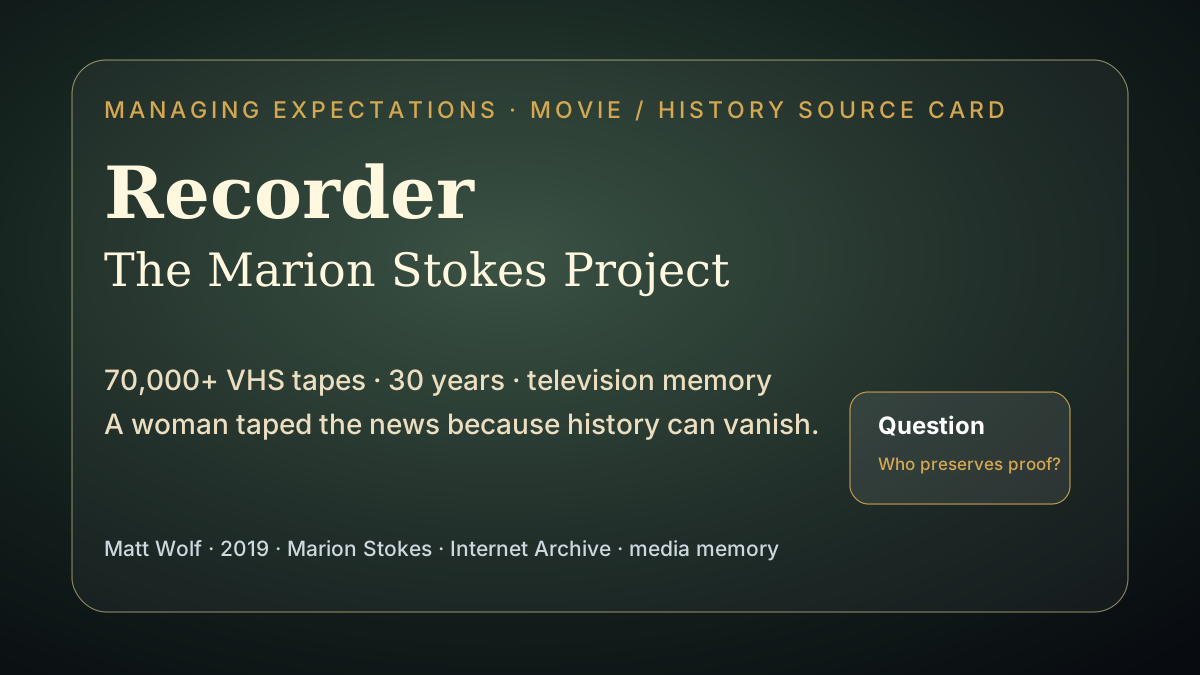
The TikTok lead calls it a documentary called “Record,” but the correct title is Recorder: The Marion Stokes Project. It belongs on the Managing Expectations movie shelf because it asks a brutal modern question: what expectation breaks when the public assumes someone else is preserving the record?
Quick correction
The film is Recorder, not simply Record. It is a 2019 documentary directed by Matt Wolf about Philadelphia activist, librarian, television producer and archivist Marion Stokes.
The TikTok lead
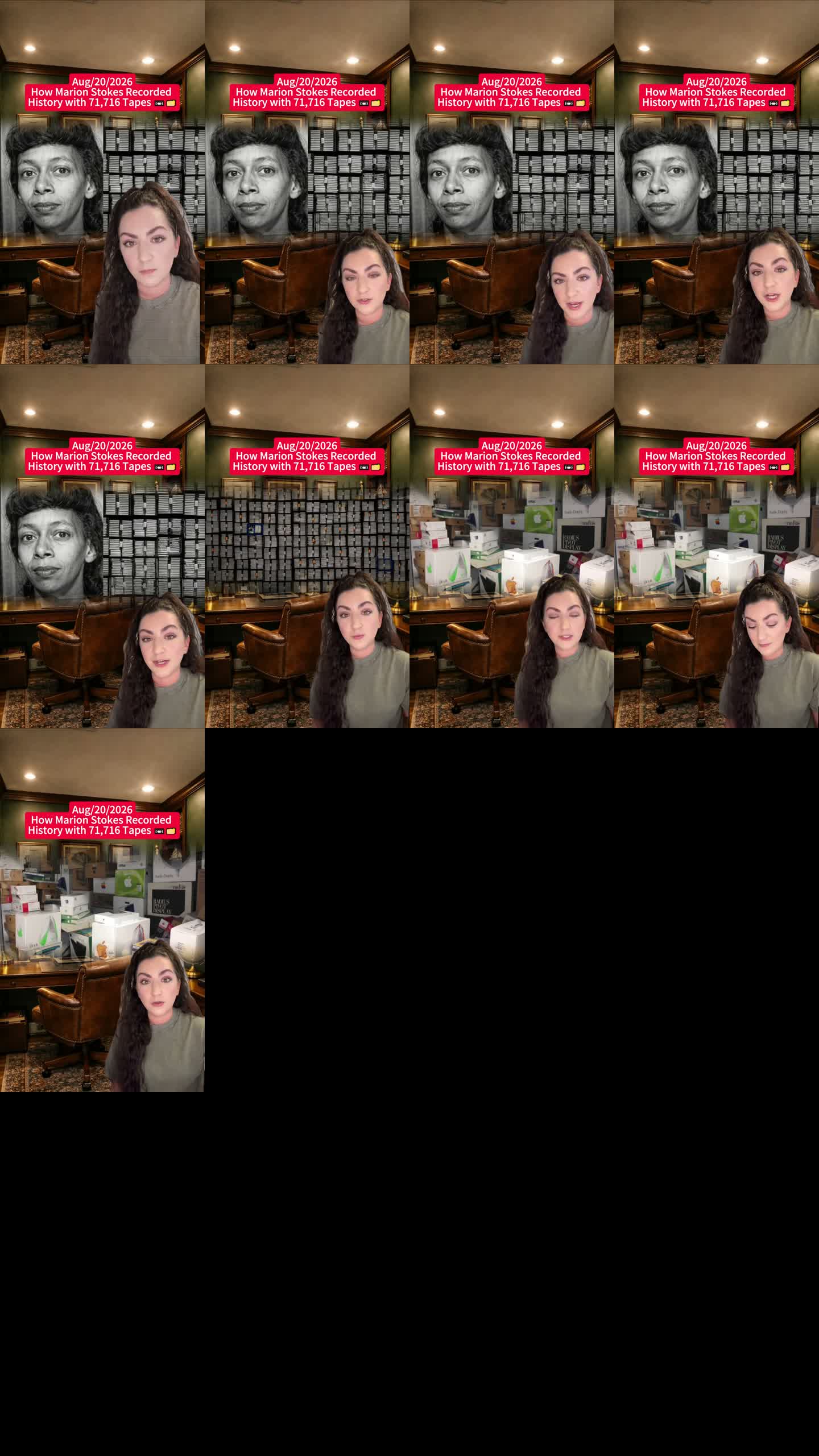
The TikTok caption says Marion Stokes recorded 71,716 tapes to preserve history as it happened. The video’s transcript describes a woman who recorded television nonstop for decades, filling apartments with tapes and using early technology/Apple wealth to keep the project going.
Captured TikTok MP4 · Transcript · Frame sheet · Source note · Claim table
Who Marion Stokes was
Marion Stokes was not only a person with VCRs. The source trail identifies her as a Philadelphia-based activist, librarian, television producer, businesswoman/investor and archivist. Internet Archive search snippets describe her as a civil-rights activist, feminist and news archivist whose activism began in the 1950s. The official film page calls her a radical Communist activist who later became a wealthy recluse archivist.
That mix matters. Her archive was not a hobby in the normal sense. It was a life organized around the suspicion that television — the medium shaping public memory in real time — could later disappear, be edited, or become impossible to check.
What Recorder says happened
The official film page says Stokes secretly recorded television twenty-four hours a day for thirty years. It says the project began in 1979 with the Iranian Hostage Crisis at the dawn of the 24-hour news cycle and ended on December 14, 2012, as Sandy Hook coverage played on television while she died.
Official film copy uses the rounded figure of about 70,000 VHS tapes. The TikTok gives the more precise 71,716 count. Managing Expectations keeps both in view: 70,000+ is safely supported by the official film page, while 71,716 is preserved as the TikTok/source-trail figure.
Why it belongs on Managing Expectations
Most people expect history to remain available. Stokes did not. She expected the record to be fragile. She expected networks to discard footage. She expected narratives to change. Her response was extreme, costly and arguably damaging to ordinary family life — but also visionary.
| Expectation | What Marion Stokes tests |
|---|---|
| Someone is saving the record. | Maybe not. Networks, platforms and governments can lose, delete or bury records. |
| The news is temporary. | Stokes treated it as raw historical evidence. |
| Archiving is neutral and tidy. | Her archive was obsessive, expensive, apartment-filling and personally costly. |
| Truth is just what was said today. | The archive lets people compare what was said then against what is remembered later. |
Claim table
| Claim / issue | Evidence label |
|---|---|
| Documentary title | The correct film title is Recorder: The Marion Stokes Project. It was directed by Matt Wolf and released/festival-premiered in 2019. |
| Marion Stokes recorded television around the clock | Supported. Official film materials say she secretly recorded television twenty-four hours a day for thirty years. |
| The project began around the Iranian hostage crisis | Supported by official film copy: it says the project started in 1979 with the Iranian Hostage Crisis at the dawn of the 24-hour news cycle. |
| The archive ended at her death in 2012 | Supported. Official film copy says it ended Dec. 14, 2012 while Sandy Hook coverage played on television as she died. |
| 71,716 tapes | Supported as a widely repeated precise count in the TikTok/secondary source trail, but the official film page uses the round figure 70,000 VHS tapes. Managing Expectations should say 70,000+ and note the 71,716 figure as the TikTok’s precise claim. |
| She preserved more than news | Supported. Official film copy lists revolutions, lies, wars, triumphs, catastrophes, bloopers, talk shows and commercials. |
| The Internet Archive would digitize/preserve the collection | Supported. Official film copy says the Internet Archive will digitize the tapes so they can be searched online for free; Archive.org has a Marion Stokes collection page. |
| She was only a hoarder | Too simple. Sources describe obsessive accumulation and severe personal cost, but also a deliberate preservation project by an activist/librarian/producer/archivist. |
| Apple investments funded the archive | Plausible and widely reported in secondary sources/TikTok; treat with attribution unless sourcing from primary financial records. |
| The TikTok visuals are documentary footage | Not verified. The TikTok uses portrait/tape/archive-style visuals; source package preserves them, but the article should not assume every background image is from the documentary or archive. |
What to watch for in the documentary
- The tension between preservation and obsession.
- The idea that news footage is not disposable entertainment but future evidence.
- The personal cost paid by family members around a mission that never stopped.
- The shift from analog tapes to digital access through the Internet Archive.
- The uncomfortable question: was Marion Stokes paranoid, prophetic, or both?
Use with care
Recorder is a documentary portrait, not a complete court record of every claim around Stokes. The TikTok is also a short social-video summary, not the documentary itself. Treat the video as a lead, then use the film page, PBS/Independent Lens, Internet Archive and reporting/reviews for context.
Also do not assume the TikTok’s background imagery is original documentary footage. The source package preserves the frames, but the article uses them as TikTok evidence, not as authenticated archive-room images.
Bottom line
Marion Stokes managed one expectation better than almost anyone: she did not expect history to save itself.
That is why Recorder belongs on the movie shelf. It is about tapes, but it is really about proof — who keeps it, who loses it, who edits it, and who pays the price for refusing to let it disappear.
Source links
- TikTok lead
- Resolved TikTok
- Official film site
- PBS Independent Lens
- Internet Archive Marion Stokes collection
- Internet Archive blog tag
- Atlas Obscura
- LA Review of Books
- Criterion Channel
- Local source note
- Key source extracts
Movies shelf
Back to Managing Expectations movies: films and documentaries that test the stories people tell themselves when assumptions collapse.
Back to Movies