Medical caution
This is a source review, not medical advice. Do not drink urine to treat disease, detox, infection, cancer, kidney disease, neurological disease, or any other condition. If someone is sick, dehydrated, pregnant, immunocompromised, taking medication, or has kidney/urinary disease, urine drinking may be especially risky. Talk to a licensed clinician.
Bottom line
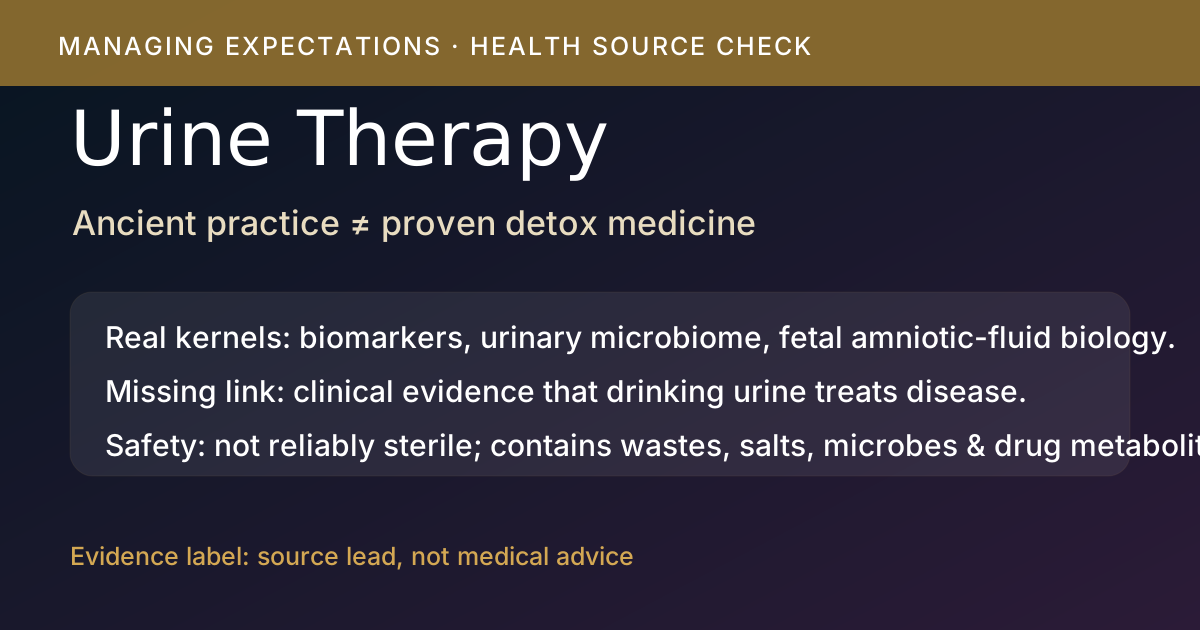
The TikTok contains a few real biological kernels: urine is a diagnostic fluid, it contains measurable molecules, urinary extracellular vesicles are studied as biomarkers, fetal urine contributes to amniotic fluid later in pregnancy, and the old claim that urine is sterile is too simple.
But those kernels do not establish that drinking urine is a safe or effective therapy. I found no good clinical-trial or systematic-review evidence that autourotherapy/drinking urine treats disease, detoxifies the body, delivers useful antibodies, or “signals” the immune system in the way described.
What the TikTok claims
“Urine therapy works because it’s signaling the body with all the information of what is actually poisoning… the antibodies are concentrated in the urine… that’s why it’s sterile or sterile-like… more purified than the blood… the safest way to consume.”
The video also argues that babies “drink their urine in utero,” that urine is used to form organs and lungs, and that ancient cultures used urine therapy to get well.
Evidence label
| Claim | What the research trail says | Evidence label |
|---|---|---|
| Urine therapy is ancient | Urine has been used in folk and historical practices. History alone does not prove safety or efficacy. | True historical kernel. |
| Urine is sterile or sterile-like | Modern urinary microbiome work shows living bacteria can be found in urine, including catheterized bladder samples in women. | Misleading / often false. |
| Urine contains antibodies, exosomes or communication molecules | Urine contains many molecules and extracellular vesicles studied as biomarkers. This does not prove drinking them creates a therapeutic immune signal. | Real biology, unsupported therapeutic leap. |
| Urine detoxes disease | Urine is a route of excretion for water, salts, metabolites and waste products. Re-consuming it reintroduces some material the body is eliminating. | Unsupported and biologically backwards as a general claim. |
| Fetal urine helps babies form organs/lungs | Amniotic fluid is important for fetal development, and later gestation fluid dynamics include fetal urine and lung liquid. That is not evidence for adult urine drinking. | Real developmental biology, bad extrapolation. |
| Drinking urine is “the safest way to consume” | No credible evidence supports that. Risks include microbes, waste products, medication metabolites, dehydration/electrolyte issues and delayed medical care. | Not supported. |
The strongest sources pulled
1. Urine is not reliably sterile
Hilt et al. used expanded urine culture techniques and found that 52 of 65 catheterized urine specimens grew bacterial species. The paper’s conclusion: urine contains communities of living bacteria that comprise a resident female urine microbiota. That undercuts the easy social-media claim that urine is “sterile-like” and therefore safe to drink.
2. Amniotic fluid is important — but that does not prove urine therapy
Crosland et al. review amniotic fluid as a complex biological medium that supports fetal growth, organogenesis and programming. Brace et al. discuss fetal urine and lung liquid as major inflows into the amniotic compartment later in gestation. This supports the idea that fetal fluids have developmental roles; it does not justify adult urine drinking as medicine.
3. Diagnostic molecules are not medicine by mouth
Urine is valuable because it reflects body chemistry. That is why clinicians test it and why researchers study urinary exosomes and biomarkers. But a molecule being detectable in urine does not mean swallowing it has a targeted, beneficial, disease-correcting effect.
What would make the claim stronger?
- Randomized or well-controlled clinical trials of autourotherapy for specific conditions.
- Defined dose, preparation, contamination controls and safety monitoring.
- Mechanistic evidence that oral urine components survive digestion and produce measurable therapeutic effects.
- Adverse-event tracking in people with kidney disease, infections, pregnancy, immune compromise and medication use.
Practical conclusion
Managing expectations means not throwing away real biology because a claim sounds strange — but also not turning biological factoids into medicine. Urine is a useful diagnostic window. It is not proven detox therapy.