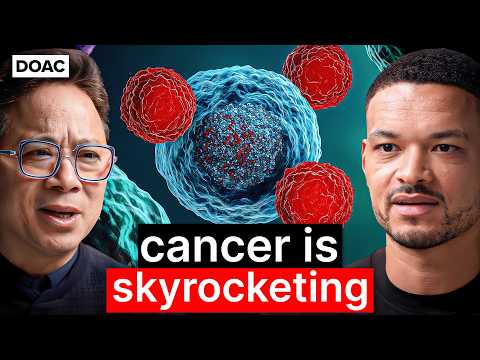
Chris sent the YouTube interview “This Common Food Is Feeding Your Cancer Cells — Dr. William Li” from The Diary Of A CEO. The clean read is: Li’s strongest message is not that one food cures or causes cancer. It is that daily patterns can either weaken or support the body’s cancer-defense systems.
Medical caution
This is health-media literacy, not medical advice. Food, sleep, activity and stress reduction can lower risk and support health, but they do not guarantee cancer prevention and do not replace screening, diagnosis, surgery, chemotherapy, radiotherapy, immunotherapy, medication or professional oncology care.
The useful idea: keep your “shields” up
Li’s frame is that the body constantly makes cellular errors, and that health depends partly on built-in defense systems: immune surveillance, angiogenesis control, DNA repair, regeneration and the microbiome. The practical translation is simple: your daily habits can either push those systems toward repair or wear them down.
That framing is compatible with mainstream prevention guidance when it is kept modest. The National Cancer Institute lists lifestyle and environmental cancer risk factors including alcohol, diet, chronic inflammation, obesity, tobacco, sunlight/radiation and infectious agents. The World Cancer Research Fund’s prevention recommendations emphasize healthy weight, physical activity, whole grains/vegetables/fruit/beans, limiting fast foods, red and processed meat, sugary drinks and alcohol.
Top practical steps
- Do not smoke, and avoid tobacco exposure. It is still the biggest avoidable cancer-risk step. The video focuses on food, but any serious cancer-prevention checklist starts here.
- Limit or avoid alcohol. Li calls alcohol a toxin. Mainstream cancer-prevention sources also treat alcohol as a cancer-risk factor. If someone drinks, less is safer than more.
- Make processed meat rare, not routine. WHO/IARC classifies processed meat as carcinogenic to humans, especially in relation to colorectal cancer risk. Hot dogs, deli meats, salami and similar foods are not “never once,” but they should not be a daily base.
- Reduce ultra-processed foods and added sugar. The transcript repeatedly links excess added sugar and ultra-processed foods with metabolic stress. The safer version: protect metabolic health by emphasizing whole foods, fiber and lower-added-sugar patterns.
- Build meals around plants, fiber and variety. Vegetables, fruit, beans, whole grains, nuts, seeds, herbs and polyphenol-rich foods support gut health and help displace riskier patterns. This is not “one magic food.” It is dietary pattern.
- Use coffee and tea as supportive habits, not medicines. Li highlights coffee, green tea/matcha and polyphenols. Reasonable takeaway: unsweetened coffee/tea can be part of a healthy pattern; do not turn them into cancer treatments.
- Move daily and protect body weight. Physical activity and avoiding excess body fat are major mainstream prevention themes. Exercise also supports insulin sensitivity, inflammation control and immune function.
- Sleep 7–9 hours when possible. Li emphasizes sleep as repair time. Poor sleep also interacts with stress, alcohol, metabolism and immune resilience.
- Manage chronic stress before it becomes the lifestyle. The video’s useful warning is not “stress causes cancer by itself”; it is that chronic stress can worsen sleep, alcohol use, inflammation, blood pressure and immune resilience.
- Do the boring medical prevention steps. Vaccines where appropriate, sun protection, HPV/hepatitis risk reduction, screening tests and prompt medical evaluation beat wellness-video guessing.
What to avoid overstating
The YouTube title says a common food is “feeding your cancer cells.” That is attention language. Cancer biology is not that simple. Cancer cells use nutrients, but no single food explanation replaces risk-factor science, screening, genetics, environment, infection, age, randomness or medical care.
Likewise, individual foods Li mentions — green tea, matcha, coffee, tomatoes/lycopene, berries, soy, pomegranate, cranberries, grapes, artichoke or parsley — should be treated as supportive food-pattern examples, not prescriptions and not cures.
Evidence labels
- Strongly supported: avoid tobacco, limit alcohol, stay active, maintain healthy weight, eat more whole plant foods, limit processed meat and ultra-processed food patterns, follow screening/vaccine guidance.
- Plausible but not a cure: microbiome-supportive foods, polyphenols, coffee/tea, tomatoes/lycopene and other “food as medicine” examples.
- Use caution: “stage four to stage zero” anecdotes, “starve cancer” phrasing, microplastic claims, and any implication that lifestyle replaces oncology care.
- Practical takeaway: use the video as motivation to clean up the risk stack, not as a treatment plan.
Primary links
- YouTube: Diary of a CEO interview with Dr. William Li
- National Cancer Institute: Risk Factors for Cancer
- World Cancer Research Fund: Cancer Prevention Recommendations
- WHO/IARC: Red and processed meat Q&A
- Local source note
Bottom line
Li’s best contribution is the “shields up” metaphor: stop weakening the body with routine alcohol, processed meats, added sugar, ultra-processed food, poor sleep and chronic stress; start supporting the body with movement, sleep, fiber, diverse plant foods and medical prevention. That is not a cancer cure. It is a sane risk-reduction plan.
Health Papers, Studies & Films
Continue the source library for cancer-prevention media, health claims and evidence boundaries.
Back to Health Section