Chris sent two social videos: one warning that sustainable-development language is an “inventory and control” program over land, resources and people; another warning that Vancouver’s police-drone rollout may normalize aerial surveillance. The useful question is not whether every extreme claim is proven. The useful question is: when do public-good policies become control infrastructure?

The thesis
The danger is rarely one policy in isolation. It is the stack: land-use targets, protected-area mapping, digital IDs, automated license plate recognition, body cameras, drone response, real-time operations platforms, data-sharing agreements and “temporary” emergency powers. Each piece can be defended as reasonable. Together, they can change the relationship between citizen and state.
First distinction: Agenda 21, Agenda 2030 and 30x30 are not the same thing
The X video refers to a 1992 UN plan, “Agenda for the 21st century,” which is Agenda 21. Agenda 2030 is the later UN sustainable-development framework adopted in 2015. The 30x30 target comes from biodiversity policy — especially the Kunming-Montreal Global Biodiversity Framework Target 3 — which calls for at least 30 percent of land/inland water and coastal/marine areas to be conserved or managed by 2030.
Those are real policy frameworks. But it is a leap to say the documents themselves prove a single secret world-government plan. A better freedom analysis is more concrete: these frameworks create incentives, targets, mapping exercises, funding streams, local plans and compliance language. That is where property rights, rural livelihoods, Indigenous governance, resource development and democratic consent can collide.
What the X video claims
The X clip frames Agenda 21 as an “inventory and control plan” over land, water, minerals, plants, animals, food, energy, information and human beings. It claims sustainable development is not mainly about recycling or better resource use, but about moving people into dense city centres, clearing rural areas, and making systems easier to centrally control.
That should be treated as a political warning, not as a proven factual conclusion. Still, the warning points at a real issue: when governments count, classify and map everything, the inventory can become the precondition for control. The debate should focus on authority, consent, compensation, appeal rights, transparency and limits.
What 30x30 actually says
The Convention on Biological Diversity’s Target 3 says countries should ensure and enable that by 2030 at least 30 percent of terrestrial, inland-water, coastal and marine areas are effectively conserved and managed through protected areas and other effective area-based conservation measures, especially areas important for biodiversity and ecosystem services.
The official language includes ideas many people support: biodiversity, ecosystem services, equitable governance, connectivity and Indigenous/traditional territories. But implementation matters. If a 30x30 target becomes a top-down land lockup without local consent, compensation, economic transition or clear appeals, it will feel like a land grab even if the policy language is green and polite.
Where “land grab” fears begin
- Mapping before consent: citizens see maps, targets and planning tables before they see meaningful consent.
- Target pressure: a percentage goal can reward officials for counting acres, not for protecting rights.
- Rural cost, urban applause: people far from the affected land support conservation while local livelihoods carry the burden.
- Regulatory layering: each designation, buffer, permit, habitat rule or deferral may be defensible alone but cumulative in effect.
- Vague language: terms like “other effective area-based conservation measures” can be useful, but also hard for ordinary citizens to understand or challenge.
The surveillance layer: Vancouver drones as a live example
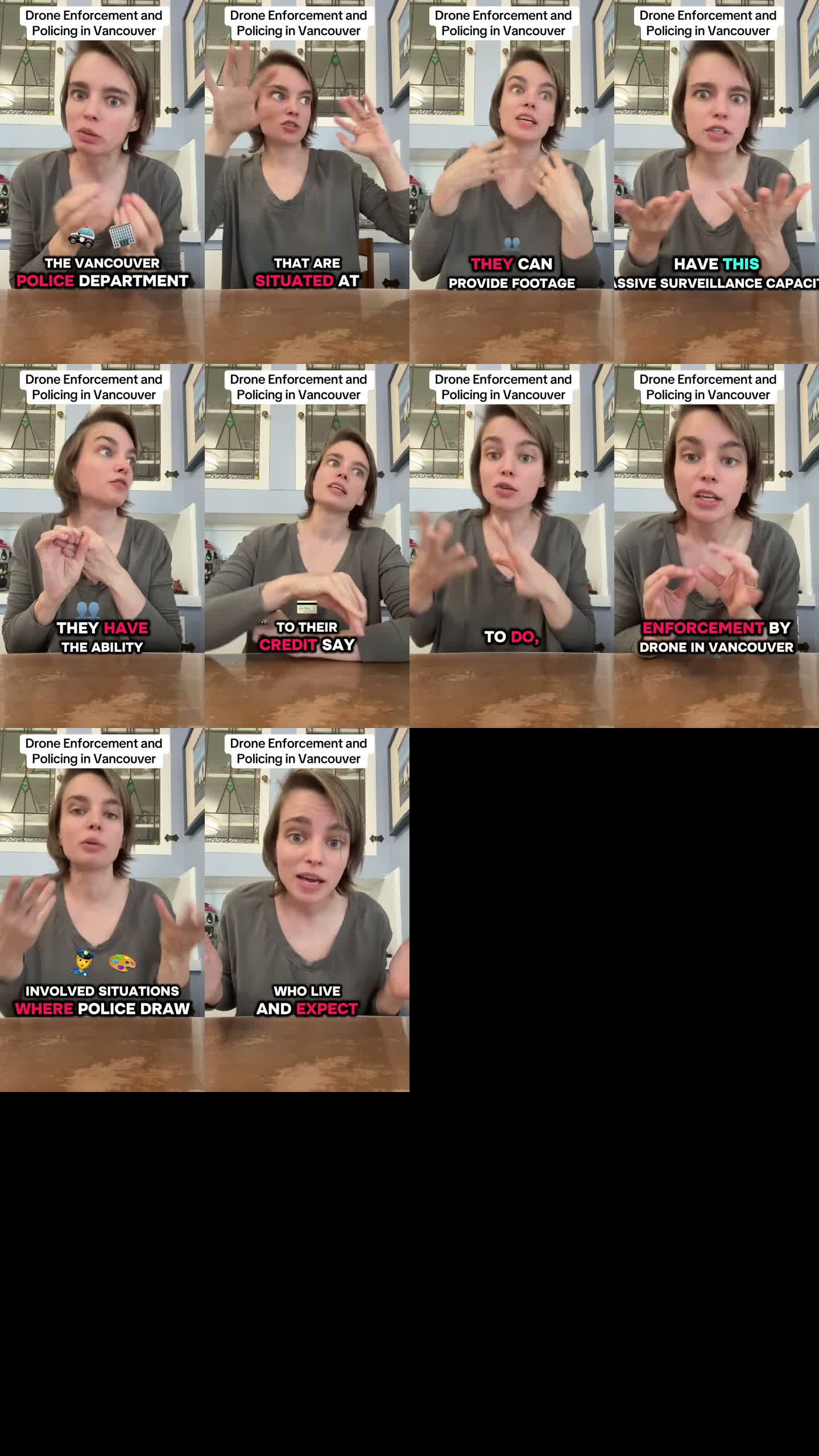
The Facebook reel from Kyla Lee discusses Vancouver Police “Drone as First Responder” technology. The official VPD release confirms that Vancouver is deploying Skydio X10 drones, body-worn camera live-streaming, Axon/Fusus real-time operations, automated license plate recognition and other connected technologies. VPD says these tools improve public safety, response times and situational awareness, and that privacy, policy and data safeguards apply.
The civil-liberties problem is not that every drone flight is abusive. It is that drone launch pods, body cams, ALPR, real-time operations centres and AI-assisted platforms can create a persistent observation network. Even if today’s policy says “not for surveillance,” the word “yet” matters because capabilities tend to expand after the public gets used to them.
How small things become control systems
Most people imagine control arriving as one dramatic law. More often, it arrives as administrative plumbing:
- one protected-area target;
- one emergency order;
- one “temporary” camera;
- one drone response pilot;
- one data-sharing platform;
- one automated licence-plate reader;
- one social-credit-style scoring rule by another name;
- one grant program that quietly makes local governments adopt the same language.
None of those pieces has to be evil on its own. The freedom question is whether citizens can see the whole stack, challenge the whole stack, and say no to the whole stack when it exceeds consent.
What a free society should demand
- Plain-language maps: show exactly what land is affected, who owns it, what uses are restricted, and what appeal process exists.
- Compensation and consent: conservation should not quietly transfer the cost of a public goal onto private families, rural communities or small businesses.
- Sunset clauses: emergency surveillance tools and pilot programs should expire unless publicly renewed.
- Warrants and thresholds: drones, ALPR and real-time camera systems need hard rules for when they can follow people, record private spaces, retain footage or share data.
- Independent audits: internal policy is not enough. The public needs outside review, logs, breach reporting and consequences.
- No mission creep: technology bought for critical incidents should not quietly become routine monitoring.
Managing expectations
Agenda 2030, 30x30, biodiversity policy and police technology are not automatically the same thing. But citizens are not wrong to connect them as part of a broader pattern: institutions increasingly describe life through targets, datasets, risk scores, maps, sensors and compliance systems.
The answer is not panic. The answer is disciplined resistance: read the source documents, ask who benefits, demand local consent, force written limits, insist on audit trails, and never allow “safety” or “sustainability” to become a blank cheque for permanent control.
Source links
- X video source: Agenda 21 / control claim
- Facebook reel source: Kyla Lee on VPD drone enforcement
- Local X transcript
- Local Facebook transcript
- Local source note
- UN: 2030 Agenda for Sustainable Development
- Convention on Biological Diversity: Target 3 / 30x30
- VPD: New technology / Drone as First Responder release
- VPD RPAS / drone policy PDF
Freedom section
Source-grounded notes on liberty, responsibility, land, surveillance, due process and civic courage.
Back to Freedom