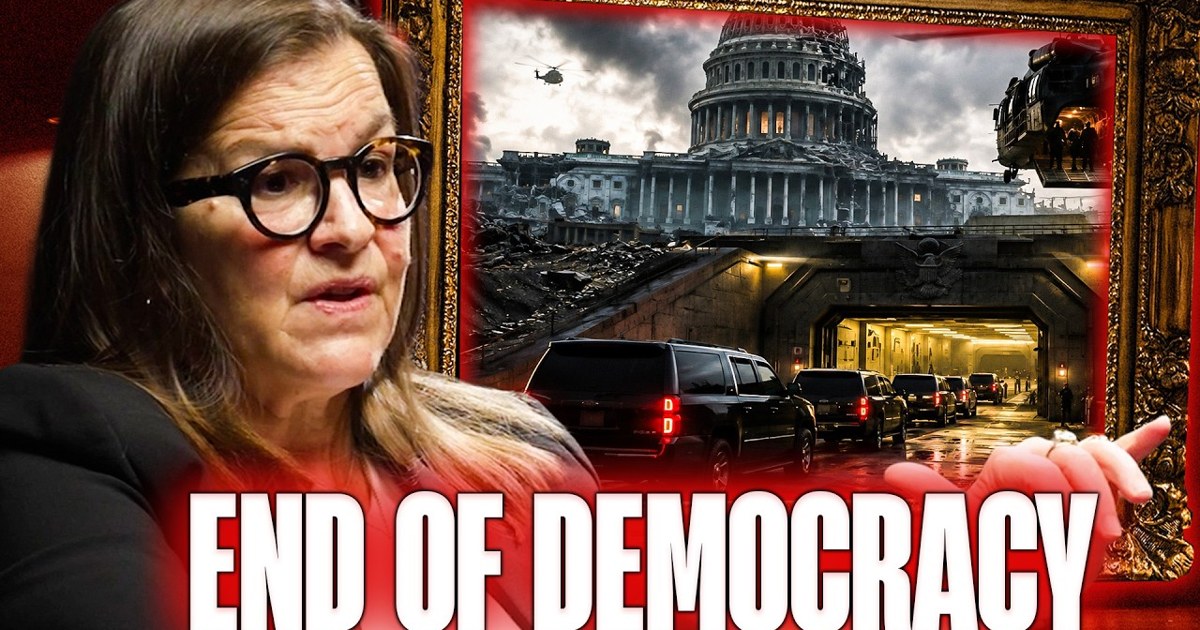
The Shawn Ryan clip is framed around a “secret plan for America’s collapse.” The better Managing Expectations question is not whether every dramatic scenario should be swallowed whole. It is why Annie Jacobsen’s work keeps returning to the same uneasy territory: classified programs, catastrophic planning, state secrecy, technological power and the moral cost of being unprepared.
Short read
Annie Jacobsen is a Pulitzer Prize finalist and bestselling investigative author whose books form a shelf on U.S. national-security secrecy: nuclear war, biological war, CIA paramilitary action, DARPA, Area 51, Operation Paperclip, psychic research and biometric warfare. Her value for readers is not comfort. It is a repeated demand to look directly at systems that prefer to stay abstract.
The clip behind this article
The linked clip, “Inside the Government’s Secret Plan for America’s Collapse,” comes from Shawn Ryan Clips and is excerpted from the full Shawn Ryan Show episode SRS #323 Annie Jacobsen — Is America Ready for Biological War?. The transcript discusses devolution, continuity of government, classified planning, bunkers, hot/warm/cold sites, biological threats and the difference between “conspiracy theory” and what Jacobsen calls a more careful “speculative narrative.”
The full episode page and YouTube description identify Jacobsen as a Pulitzer Prize finalist, investigative journalist and bestselling author known for national security, intelligence, military history and classified government programs.
Why Jacobsen fits Managing Expectations
Jacobsen’s books often sit at the border where citizens know a program exists but cannot know its full interior. That is where expectations become dangerous. If readers expect total transparency, they become naive. If they expect all secrecy to equal conspiracy, they become unmoored. Jacobsen’s strongest material asks readers to hold two ideas together: secrecy can be necessary, and secrecy can also hide catastrophic incompetence, moral compromise or institutional pride.
The books she has written
| Book | Source/status | Managing Expectations lane |
|---|---|---|
| Biological War | Forthcoming / PRH-Dutton listing | Biological warfare, pandemic planning, catastrophic scenarios and government response. |
| Nuclear War: A Scenario | 2024 | A minute-by-minute nuclear-war scenario built from interviews and public-source nuclear-command research. |
| Surprise, Kill, Vanish | 2019 / 2020 paperback | CIA paramilitary operations, covert action and moral ambiguity. |
| The Pentagon’s Brain | 2015 | DARPA, military research and the hidden architecture of future war; Pulitzer finalist in History. |
| Area 51 | 2011 | The famous Nevada military site, secrecy culture and Cold War aerospace programs. |
| Operation Paperclip | 2014 | The U.S. recruitment of Nazi scientists after World War II and the ethical compromises of national security. |
| Phenomena | 2017 | U.S. government investigations into ESP, psychokinesis and psychic research. |
| First Platoon | 2021 | Modern war, biometric identity systems and “identity dominance.” |
What the current interview adds
The new Shawn Ryan episode ties her earlier nuclear and classified-program work to biological warfare and continuity planning. The clip’s most important idea is not the bunker imagery. It is the trust problem: if the government has elaborate plans for collapse, why is public preparation so thin, and why do officials so rarely admit when they were wrong?
That is a classic Managing Expectations tension. Planning for the worst is rational. Hiding too much of the plan can make public trust worse. Over-dramatizing the plan can turn preparation into panic. The useful middle path is source discipline.
How to read Jacobsen responsibly
Do not read her as comfort literature. The subjects are dark: nuclear command, bioweapons, covert action, military research, Nazi scientists and surveillance systems.
Do not turn scenario into prophecy. A scenario is a structured warning, not a prediction that the exact sequence must happen.
Watch the sourcing. Her books use interviews, declassified records and specialist sources, but some details are necessarily constrained by classified boundaries and insider memory.
Separate the documented from the inferred. The existence of continuity planning is different from proving who would secretly govern in a future collapse.
Book-by-book reading path
Start with Nuclear War: A Scenario if the interest is catastrophic systems and decision timelines. Read The Pentagon’s Brain for DARPA and the military-research machine. Read Operation Paperclip for the moral bargain hidden inside “national interest.” Read Surprise, Kill, Vanish for covert action. Read First Platoon for identity, surveillance and modern war. Read Phenomena and Area 51 when the question is how strange programs, secrecy and public myth feed one another.
Source links
- Lead clip: Inside the Government’s Secret Plan for America’s Collapse
- Full episode: Annie Jacobsen — The Government’s Classified Plan for Biological War | SRS #323
- Shawn Ryan Show episode page
- Annie Jacobsen official Books page
- Penguin Random House author page
- Penguin Random House: Biological War
- Source note and preserved metadata/transcript
- Transcript of the lead clip
Bottom line
Jacobsen’s shelf is useful because it refuses the easy story. It does not simply say “trust the government” or “everything is a conspiracy.” It says: follow the program, read the records, listen to people who built the systems, and then manage expectations about what power does when it is frightened.
Books source-card rule
A book can be valuable without being final. Managing Expectations treats author interviews as reading leads, then checks the shelf, the source record and the practical lesson.
Back to Books