The reel is right about one important thing: many modern readers have never seen books and additions that older Bibles, Catholic Bibles, Orthodox traditions and apocrypha collections preserve. But the viral leap — “the church hid these because they did not fit the narrative” — is too simple, and in one key way backwards.
Source-card caution
This is a source check, not a sermon. The question is not whether the Apocrypha is spiritually valuable; the question is what the reel gets right, what it overclaims, and how to discuss Bible canon history without turning real complexity into a conspiracy shortcut.
The reel
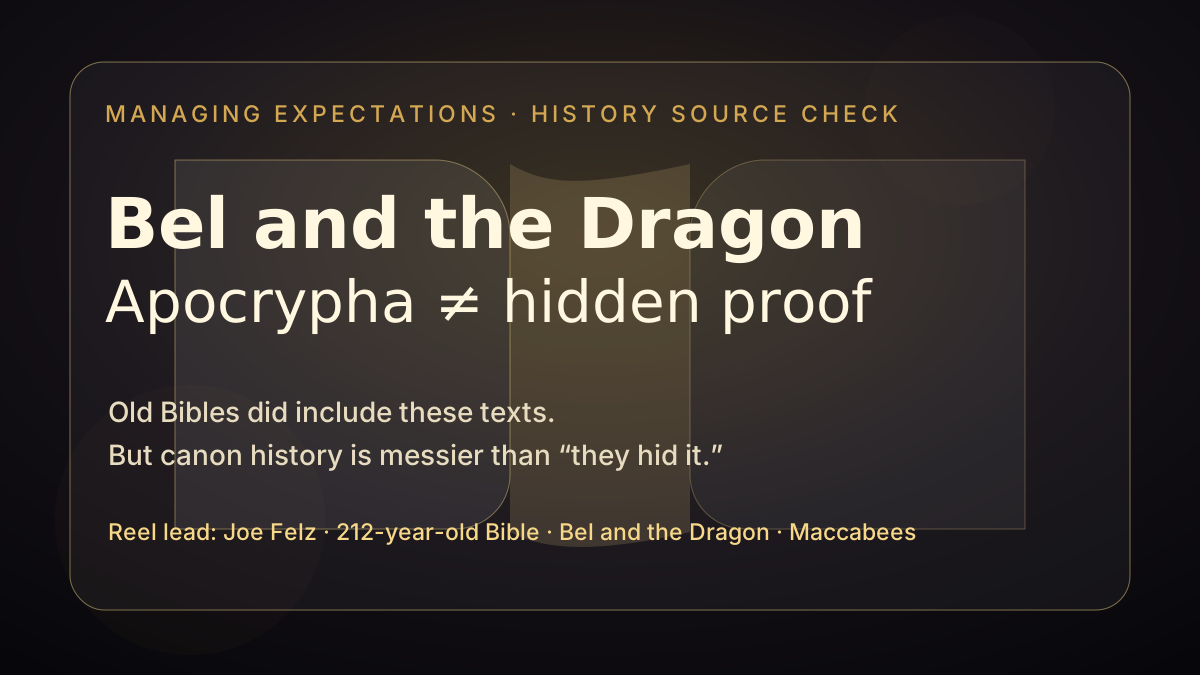
The Instagram reel by Joe Felz shows a large old Bible and a page headed “The history of the destruction of Bel and the Dragon.” The speaker says the Bible is 212 years old, contains the Apocrypha, and is being scanned so the material can be posted online.
- Watch lead: Instagram reel
- Local transcript: saved transcript
- Local source note: source note
What he is showing: Bel and the Dragon
Bel and the Dragon is a real ancient Jewish/Christian text associated with Daniel. In Catholic Bibles it appears as Daniel 14. In many Protestant contexts it is treated as part of the Apocrypha rather than as canonical scripture.
That means the visual claim is not fake. Older Bibles and apocrypha collections really can contain this material. The problem is the leap from “not in my modern Bible” to “hidden by the church.”
The correction: Catholic Bibles did not hide this
The reel frames the Catholic Church as if it removed or hid texts like Bel and the Dragon. That is misleading. The public Bible site of the United States Conference of Catholic Bishops has Daniel 14 titled “Bel and the Dragon”.
So if the claim is “Catholic tradition erased Bel and the Dragon,” the evidence points the other way. Catholic and Orthodox traditions generally preserve more deuterocanonical/apocryphal material than modern Protestant 66-book Bibles do.
What “removed” really means
“Removed” is a tempting word because it feels dramatic. The more accurate word is classified.
| Tradition / context | How these texts are often treated |
|---|---|
| Catholic Bible | Bel and the Dragon appears with Daniel; 1 and 2 Maccabees are deuterocanonical. |
| Eastern Orthodox traditions | Often preserve a broader Old Testament / Septuagint-shaped canon than Protestant Bibles. |
| Protestant 66-book Bible | Usually excludes the Apocrypha from the canon, though older English Bible history often printed it separately. |
| Ethiopian Orthodox tradition | A still broader canon discussion, including books such as Enoch, Jubilees and Ethiopian Meqabyan — but this reel is not specifically proving the Ethiopian 81-book list. |
Maccabees vs. Meqabyan
The reel also mentions Maccabees. That matters because 1 and 2 Maccabees give important Second Temple context. But for our Ethiopian Bible work, one distinction is crucial: Ethiopian Meqabyan is not the same as Greek/Latin Maccabees. They are related by name and broad martyrdom/resistance themes, but they are not interchangeable books.
The useful Managing Expectations takeaway
The strong version of the reel is this:
Modern Bible readers should know that canon history is bigger than the 66-book Protestant table of contents many people grew up with.
The weak version is this:
Every book outside my Bible was hidden by a single institution for sinister reasons.
The first statement opens a real investigation. The second one closes the investigation too early.
How to talk about this honestly
- Say the text exists. Bel and the Dragon is real and easy to find in Catholic/Apocrypha contexts.
- Say the canons differ. Catholic, Orthodox, Protestant and Ethiopian lists are not identical.
- Avoid the lazy conspiracy shortcut. Canon formation is historical, theological and institutional; it is not reducible to one villain sentence.
- Keep reading. The Apocrypha, Enoch, Jubilees, Maccabees/Meqabyan and other texts are worth studying — with labels intact.
Source links
- Instagram reel by Joe Felz
- USCCB: Daniel 14 — Bel and the Dragon
- Internet Archive: Authorized Version / A.D. 1611 Apocrypha commentary volume
- Internet Archive: Authorized Version 1611 / Old & New Testaments & Apocrypha collection
- Local source note
- Local Instagram metadata
- Local transcript
History shelf
Back to Managing Expectations history: old texts, old maps and viral claims handled as leads to investigate, not conclusions to swallow.
Back to History