Energy / Deep Fission / underground SMR / reactor hardware / data-center firm power
Deep Fission’s Borehole Canister Test: Hardware Milestone, Still Not a Reactor in the Ground
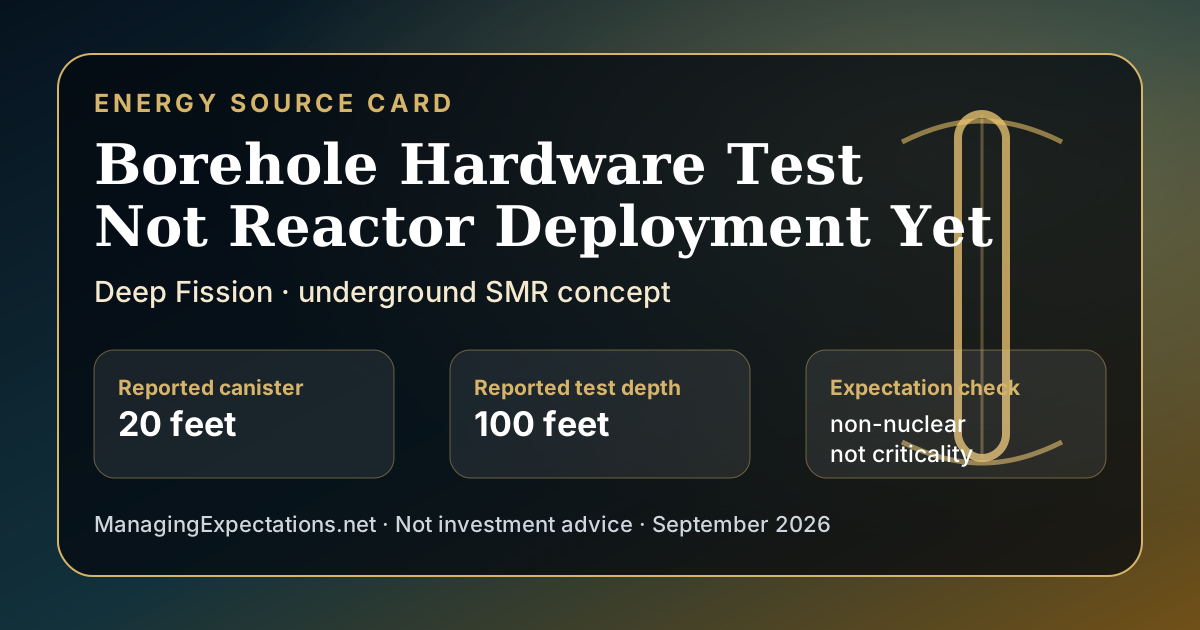
Deep Fission has a new, concrete milestone: it says a commercial drilling crew lowered and retrieved a full-size, non-nuclear prototype reactor canister from a borehole using standard drilling equipment. That is more useful than a generic partnership announcement because it tests one physical sequence the company’s underground-reactor plan depends on.
The expectation check is just as important. The public record supports a canister-handling demonstration at 100 feet. It does not show a fueled reactor in a one-mile borehole, nuclear criticality, NRC commercial licensing, a completed plant, grid interconnection, a mine-electrification project or delivered data-center power.
Verified hardware signal
Deep Fission says the September 3 test lowered a 20-foot canister to 100 feet inside a 34-inch borehole, aligned it, and retrieved it.
Non-nuclear boundary
The company says the prototype was a full-size replica designed to house the Gravity reactor core and contained no nuclear fuel.
Expectation check
World Nuclear News frames the item as a demonstration step inside a broader validation path that still needs drilling, integration, approvals and operation.
What changed
Deep Fission’s September 10 release says the canister was handled by a commercial drilling and rigging crew, without custom equipment invented for nuclear service. The reported sequence matters because the Gravity reactor concept shifts major plant functions underground: the reactor canister is supposed to be installed in a deep, water-filled borehole rather than in a conventional surface containment structure.
The reported dimensions are precise enough to preserve: a 20-foot full-size non-nuclear canister, a 34-inch-wide borehole, a 100-foot test depth, and the September 3, 2026 installation-and-retrieval date. Deep Fission says its final concept is a pressurized-water-reactor-based SMR approximately one mile underground, using standard low-enriched uranium fuel.
DOE context keeps the story from floating as company hype. DOE’s Reactor Pilot Program page describes a pathway for advanced reactor demonstration, and DOE’s initial-selection release named Deep Fission Inc. among the companies selected for the program. Those DOE pages do not independently verify this specific September 3 canister test; they verify the broader program lane.
Why it matters for the Energy watch
- Advanced nuclear credibility is gate-by-gate. Physical handling, fuel, licensing, safety analysis, construction execution and operations are separate tests.
- Deep underground siting is the differentiator. A successful shallow handling test is useful evidence for a deployment sequence, not proof the full-depth nuclear system works.
- For AI campuses, mines and industrial customers, the relevance is future firm-power optionality. This item does not put megawatt-hours on any customer site.
- For uranium and nuclear-supply readers, the source-backed implication is strategic demand interest, not a commodity or equity signal.
Cautions
Do not call this a reactor start-up. The canister contained no nuclear fuel, and the test depth was 100 feet, not the approximately one-mile final deployment model Deep Fission describes. The hard future evidence will be public authorization documents, full-depth drilling records, fuel arrangements, safety analysis, NRC engagement, operating data and signed commercial power contracts.
This is also not proof that borehole nuclear will be cheaper, faster or easier than conventional plant construction. It is a serious hardware-progress lead that still has to pass the nuclear-regulatory, financing, public-acceptance and operations tests that decide whether a concept becomes infrastructure.
Not investment advice: Deep Fission, uranium, SMR developers, drilling contractors, nuclear fuel suppliers, utilities and data-center firm-power narratives are volatile. This article is source-literacy and infrastructure evidence research, not a recommendation to buy, sell or hold any security or commodity exposure.
Primary and reporting sources
- Deep Fission — Deep Fission Installs and Retrieves Full-Scale Reactor Canister Using Off-the-Shelf Drilling Equipment (official company release, September 10, 2026).
- World Nuclear News — Deep Fission completes borehole demonstration (nuclear-trade reporting, September 11, 2026).
- U.S. DOE Office of Nuclear Energy — Reactor Pilot Program (official program context).
- U.S. DOE — initial Reactor Pilot Program selections (official release naming Deep Fission among selected companies, August 12, 2025).
- Managing Expectations — prior Deep Fission NSDA source-card (context; August 6, 2026).
- Managing Expectations source note and checked leads.